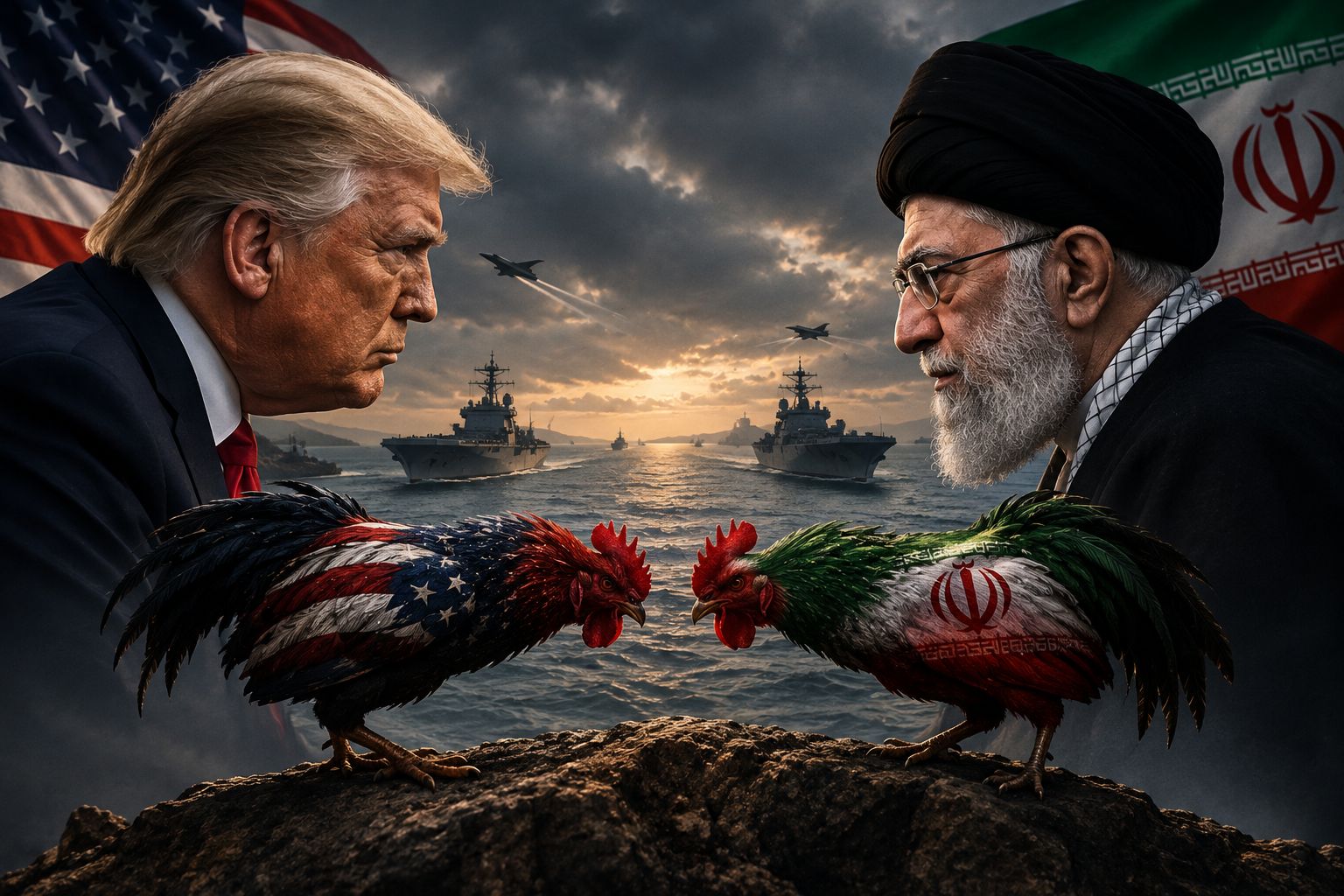
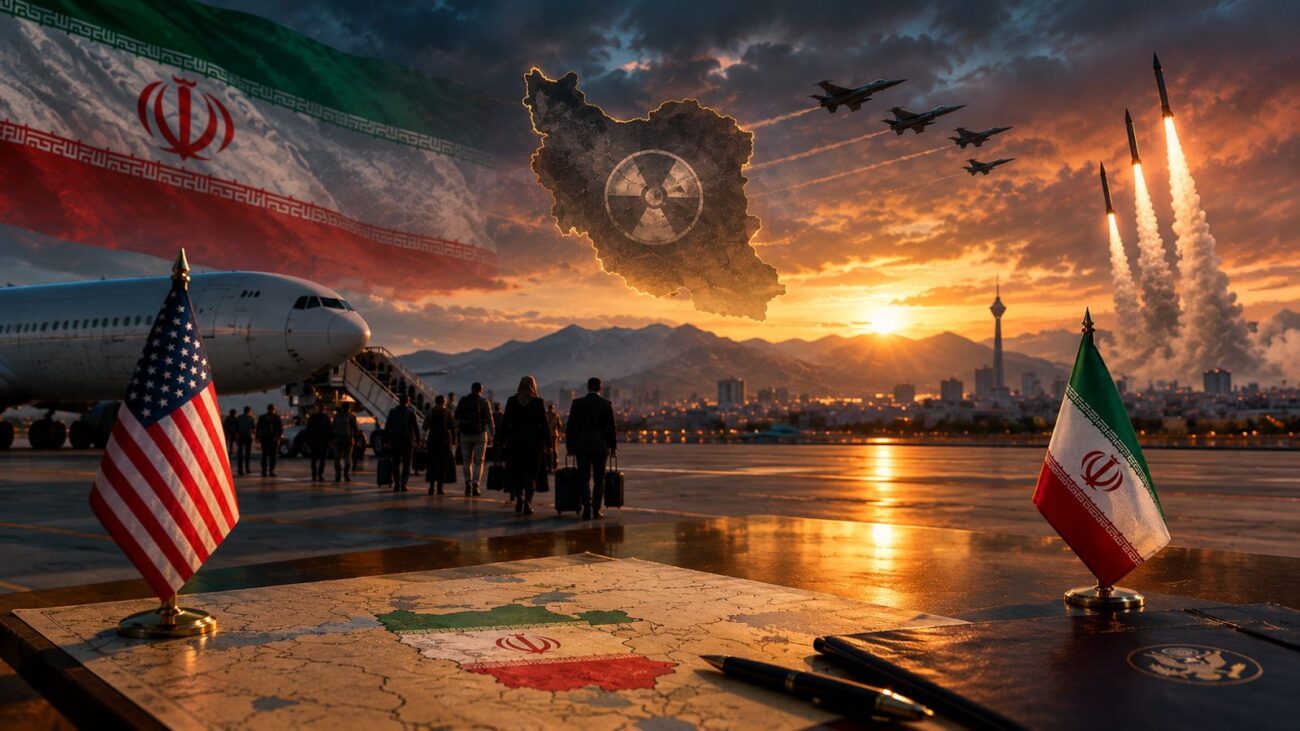
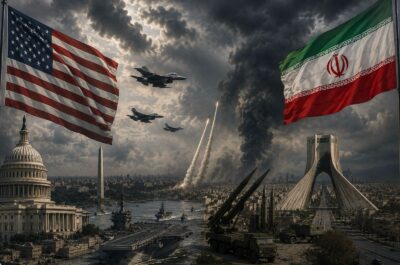
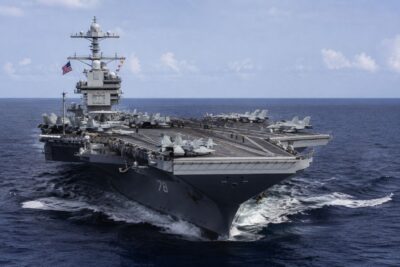
More than seven months have passed since the first military confrontation between Iran and the United States. During this period, not only has diplomacy failed to produce common ground or a final agreement, but both states have also continued to conduct limited and sporadic military actions against each other’s positions. In other words, despite the considerable costs they have incurred, neither side has so far been willing to make a strategic retreat and step away from the confrontation. This fact indicates that the shadow of war continues to hang over the security environment of the Persian Gulf, while the possibility of a broader conflict remains a persistent concern.
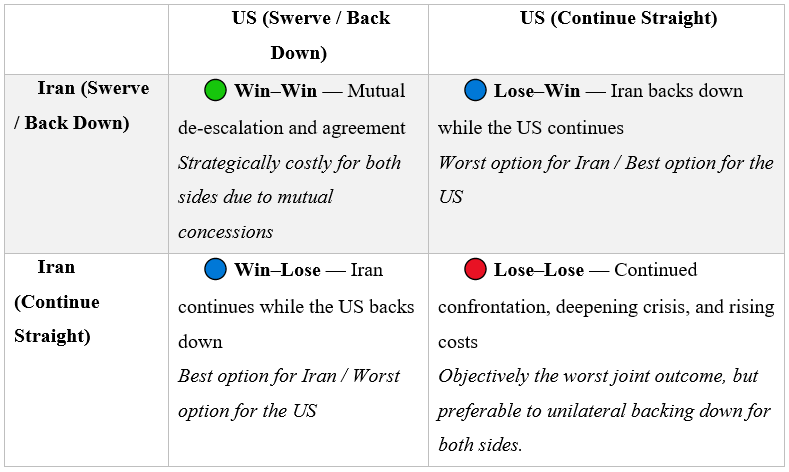
The theory of the ‘game of chicken’ can provide a useful framework for explaining why this confrontation persists. According to the logic of the game, continued confrontation represents the worst joint outcome for both players. Yet, from the perspective of the strategic calculations of Iran and the United States, both sides have moved towards this outcome because each considers unilateral backing down—and allowing the other side to gain the strategic upper hand—to be more costly. In other words, although continued confrontation constitutes the worst outcome in the game, it has become the strategically preferred course of action for both players relative to unilateral retreat.
Chicken Game Matrix Based on the Strategic Calculations of Iran and the United States
The strategic calculations on each side, which follow different logics, are what keep this game alive. The Islamic Republic of Iran’s assessments run first and foremost through the lens of survival and existential security. From Tehran’s point of view, exiting the war—which would only happen through some possible deal involving the surrender or oversight of Iran’s enriched uranium—amounts to walking towards an existential threat. Under that reading, backing down now might not reduce the threat at all; it could actually make Iran more strategically vulnerable, since Washington could later push for behaviour change or even regime change at lower cost and risk. Along these lines, Ali Khezrian, a member of the National Security and Foreign Policy Committee of the Islamic Consultative Assembly of Iran, has warned bluntly: “… if the uranium is taken out, the chances of a nuclear attack on Iran go up several times over.”
Right now, there is serious ambiguity about the status of Iran’s enriched uranium stockpiles. From the perspective of Iranian officials, that ambiguity can keep alive in Washington’s mind the possibility that Iran retains a hidden or latent capability to strike back. So they have no interest in giving up their strategic trump card by handing over enriched uranium or allowing any transparency around it. After Operation Midnight Hammer, in which the nuclear facilities at Fordow and Natanz were hit, the International Atomic Energy Agency announced that it did not have complete, verifiable information about Iran’s enriched uranium stockpiles—estimated at roughly 440 kilograms at 60% enrichment before the strikes. The Agency had already warned that Iran was nearing the threshold of a nuclear weapons capability. On top of that, some reports indicate that U.S. intelligence agencies had assessed even before the twelve-day war in June that Iran might be able to build a nuclear weapon within the next three to six months. In the eyes of Iranian officials, this ambiguity has created a sense of strategic dread within the Trump administration over Iran’s possible second-strike capability. Therefore, this dread must not be allowed to fade.
By contrast, the United States’ calculations are tied more to the outcomes Trump had in mind when he started this war. Those objectives can be boiled down to at least four main goals: regime change in Iran, the destruction or fundamental crippling of Iran’s nuclear capacity, the elimination of its missile capability, and cutting off its ties to regional proxies. Despite the military and political costs and roughly eight months of war, the United States has so far failed to fully achieve any of these strategic goals.
Washington knows perfectly well, then, that walking away without results would bring two major consequences. The first has to do with validating Iran’s regional and global power. Failing to achieve those objectives would not only turn Iran into the winning actor in this conflict; it would also, in a sense, legitimise its power and influence at the regional and even global level. If Iran comes out of this fight as the winner, the international community will see it as a respected power that brought global hegemony to its knees. It is the Trump administration’s inability to deliver on its own war aims that has convinced Robert Pape, a professor of international relations at the University of Chicago, to argue that a “fourth centre of global power — that is, Iran — is quickly emerging”.
The second strategic worry for Washington has to do with what this war could do to its hegemonic position and credibility at the regional and international levels. From the Trump administration’s standpoint, exiting the war under current conditions directly puts the United States’ hegemonic order in the Persian Gulf at risk. Beyond that, the same situation could become a model for eroding United States credibility and authority in other parts of the world.
This chain of consequences can be looked at on at least three levels:
First, a United States withdrawal would amount to handing Iran a de facto licence to expand its dominance and influence over at least part of the region. That, in turn, could shift the regional balance of power against the United States and its allies and open the door to greater Iranian influence in other parts of the Middle East.
Second, leaving this war without results would expose the United States’ military weakness and inability to achieve its objectives to other great powers. That would carry damaging consequences for Washington, because weakening the United States’ regional standing in the Persian Gulf would push great powers—China especially—to expand their competition and ambitions in the region.
Third, this defeat could also make the United States’ regional strategic partners lose faith in its security umbrella. That loss of confidence could, in turn, become a basis for shaking up the United States’ strategic alliances in the region.
It is because of calculations like these that the United States and Iran are stuck in a strategic dilemma: staying in the fight is costly, but backing down could also bring long-term and even strategic costs in their eyes. That is why both actors have so far preferred, instead of crossing the point of retreat, to keep up mutual pressure and limited military action, holding their bargaining position by driving up the other side’s costs. If the parties keep putting these assessments at the centre of their foreign-policy decision-making, it is not unlikely that this standoff will eventually end in yet another major war in the region.
Dr Majid Dashtgard is an Assistant Professor of International Relations in the Department of Political Science at Ferdowsi University of Mashhad, Mashhad, Iran. He formerly served as a senior researcher at the Jahān-Pazhouh Institute for International Studies in Tehran. His research focuses on international security, Iranian foreign policy, and great power politics. His work has appeared on several platforms, including the Henry L. Stimson Center and the Cambridge Middle East and North Africa Forum (MENAF).