
Publications
What the Democratic Sweep in the US Midterm Elections Means for Trump’s Iran Policy and Gulf Security
Dr. Kristian Alexander
Commentary
Commentary/0008/November/2026/London-Dialogue. 05 November 2026
By: Dr Kristian Alexander
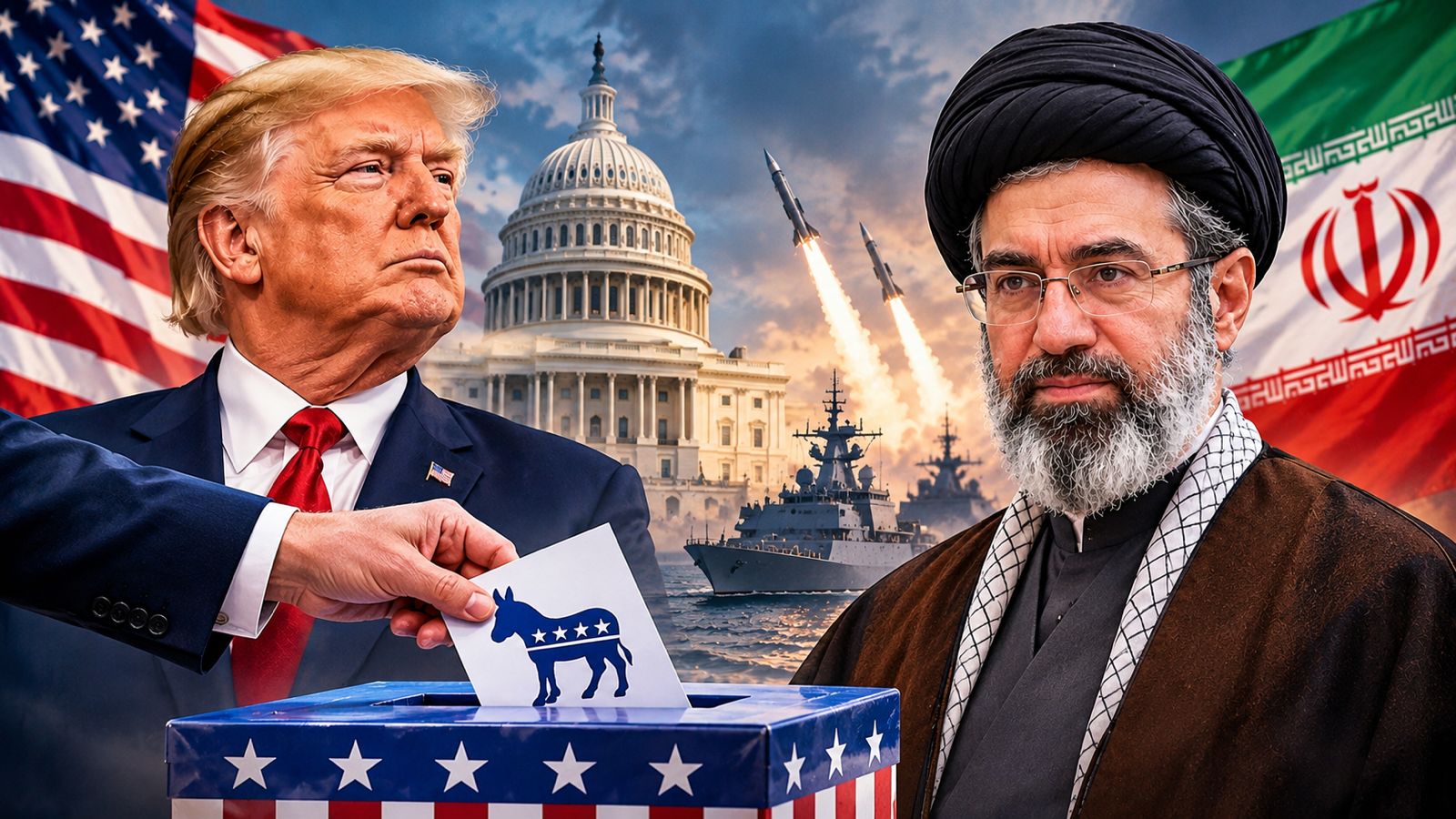
Democrats have won both chambers of Congress, securing at least 54 Senate seats through gains that include Texas, Kansas and South Carolina. In Michigan, Abdul El-Sayed defeated Mike Rogers, keeping the seat in Democratic hands and becoming the first Muslim elected to the Senate. These victories give lawmakers across the party reason to examine how the Iran war has affected fuel prices and household spending. Agreement on those costs may prove easier than finding common ground on sanctions, missile defence or military pressure.
The immediate concern is what Trump might do before the new Congress takes office on 3 January. Washington and Tehran remain far apart on a settlement, and the recent US strike on Iran’s Qeshm Island shows that military action is continuing alongside negotiations.
Where Congress can change US policy
With majorities in both chambers, Democrats will have more ways to challenge Trump’s Iran policy. Committee chairs can call administration officials to testify, Senate leaders can schedule votes on war powers, and appropriators can question requests for further spending. The Senate majority can also block his nominees.
A request for additional war funding would force a debate over what further fighting could achieve. Protecting shipping requires a different military commitment from disabling Iran’s nuclear programme or forcing Tehran into a wider settlement. Each objective also raises its own question about when operations would end. Lawmakers could demand explicit congressional authorisation and attach conditions to new funding, restricting offensive strikes while maintaining support for the defence of US forces and regional partners. Their influence would grow if a campaign required repeated funding requests. A brief operation drawing on existing forces and appropriations would give Congress less opportunity to intervene.
In June, both chambers passed a concurrent resolution calling for an end to unauthorised US hostilities against Iran. The administration rejected its premise, maintaining that the April ceasefire had already ended hostilities. In practice, the White House can launch strikes at short notice without securing a fresh congressional vote, though the legal authority for any particular operation may be contested. Trump has also threatened to veto legislation he opposes. Overriding him would require two-thirds support in each chamber, leaving Democrats dependent on substantial Republican backing. Congress therefore has more scope to constrain a prolonged campaign that requires additional funding.
El-Sayed’s victory strengthens the case within the Democratic Party for conditioning or ending military aid to Israel. He described Israel’s conduct in Gaza as genocide and argued that money spent on Israel and the Iran war could meet needs at home. His success in Michigan gives other Democrats an electoral example to draw on. Trump’s stated intention to end annual military aid while continuing arms sales brings pressure from the Republican side as well. Joint production could remain part of the relationship. A wider review of regional assistance could also draw in Egypt and Jordan, although decisions about their aid would depend on their respective roles in US regional policy.
Congressional scrutiny could extend to the business ties surrounding Trump’s Gulf diplomacy. Democratic lawmakers have raised questions about Jared Kushner’s dealings with Gulf governments alongside his role as a US envoy. Hearings or subpoenas would bring those overlapping roles into public view and could complicate relations with the Gulf partners involved.
How Trump may respond on Iran
Trump acknowledged that the war had contributed to Republican losses but stood by his decision to launch it. In September that his aides wanted to contain the fighting until after the election. With voting over, that immediate reason for restraint has receded, while the new Congress takes office on 3 January. Trump had already spoken of finishing the job through either a deal or further military action. Netanyahu reportedly urged strikes soon after the election, while Trump wanted to allow negotiations more time. Those discussions and Qatar’s renewed mediation efforts preceded the result. A collapse in talks or another attack on US forces would offer stronger grounds for explaining renewed strikes than their timing alone.
If Trump chooses a major offensive, he has reason to begin it before January and seek to complete it before the incoming Democratic majority can hold hearings or challenge requests for more funding. Much would depend on Tehran’s response. Iranian retaliation could prolong a campaign Washington had intended to conclude quickly.
The Republican defeat also makes the domestic cost of another oil-price shock harder to dismiss. Restoring commercial passage through Hormuz could help ease fuel prices. Qatar has circulated a draft aimed at restarting negotiations, but Tehran insists that Washington meet seven conditions before the strait reopens, including lifting oil sanctions and ending the naval blockade. Trump can maintain economic pressure during talks and still order limited strikes, as the operation on Qeshm Island demonstrated. Such an operation could nevertheless trigger Iranian retaliation against targets across the Gulf.
The region could also face an extended period of sanctions, maritime pressure and intermittent attacks without a settlement. A reduction in US combat operations would give Gulf governments further reason to negotiate practical arrangements with Tehran. Israel, meanwhile, would have to weigh its options against Iran’s missile and nuclear capabilities with greater uncertainty about American participation in future strikes.
Why Gulf governments fear another round
For Gulf governments, the first round of fighting exposed the risks of hosting American forces while having limited influence over Washington’s decision to go to war. Iranian missiles struck US bases and Gulf energy facilities, bringing the consequences onto their territory. Bahrain, home to the US Fifth Fleet, depends on the protection that American forces help provide, yet their presence also gives Tehran a target through which to pressure both Washington and its host. Attacks on bases and nearby infrastructure made that vulnerability tangible.
Qatar’s reliance on Hormuz for its LNG exports helps explain the urgency of its mediation. Saudi Arabia and the UAE have some protection against disruption through pipelines that carry crude around the strait, but their ports, shipping and coastal facilities remain vulnerable. Tanker attacks alone can delay cargoes and raise insurance premiums. Iranian strikes on desalination plants or communications networks could also interrupt essential services across civilian communities. Talks remain stuck over which side should move first. Tehran wants sanctions relief and an end to the blockade before reopening Hormuz, while Washington is pressing for nuclear concessions. For Gulf governments, the strike on Qeshm is a reminder that negotiations can proceed alongside military action, leaving open the risk of renewed fighting even while mediators are working toward an agreement.
These risks give Gulf governments a direct stake in restraining further military action. Saudi officials have pressed Washington to allow more time for negotiations, while the UAE’s Anwar Gargash has publicly urged de-escalation. Alongside Qatar’s diplomatic efforts, those interventions reflect an attempt to influence decisions that could again bring retaliation onto Gulf territory.
Higher fuel and fertiliser prices have brought the costs of the Gulf conflict into American homes and businesses. Congress therefore has reason to question what another offensive would achieve and what it would cost, while supporting the diplomatic engagement, maritime cooperation and defence partnerships that help protect those interests.
Dr. Kristian Alexander
Related posts
Can Britain Bring Iran Back to the Table?
Yemen’s Forgotten Human Rights Crisis: Geopolitical Rivalries, Maritime Security and the Cost of War
The Democratic ‘Tsunami’: What It Means for Trump’s War on Iran?
Breaking the Taboo: The Strategic Folly of a US Nuclear Strike on Iran
Blurred Lines: Federalism and Provincial Autonomy in Pakistan
Paper Shields: The Makkah Pact and the Hard Test of Collective Defence
Iran’s Axis of Resistance Now: Less Than an Axis, More Than Resistance?
Leading through Uncertainty: Building Resilient Interdependence in a Multipolar World
Why Does the Game of Chicken Between Iran and the United States Keep Going?

Trojan APCs: Ukraine’s Kamikaze BTR-60s in Operation Vivaldi
The Emissions We Do Not Count: Militaries and the Missing Climate Ledger
Another Iran War? Diplomatic Evacuations and the Politics of Escalation
London Dialogue — Founding Statement
Publication Categories
- Analysis (117)
- Book Review (1)
- Commentary (8)
- Essay (17)
- Journal (0)
- Journal Article (0)
- Policy Brief (7)
- Policy Paper (1)
- Research Article (3)
- Research Report (6)
- Young Writers Corner (0)