


Publications
Monograph
Monograph/01/October/2026/London-Dialogue. 16 October 2026
Authors: Dr Tahir Mahmood Azad
Executive Summary
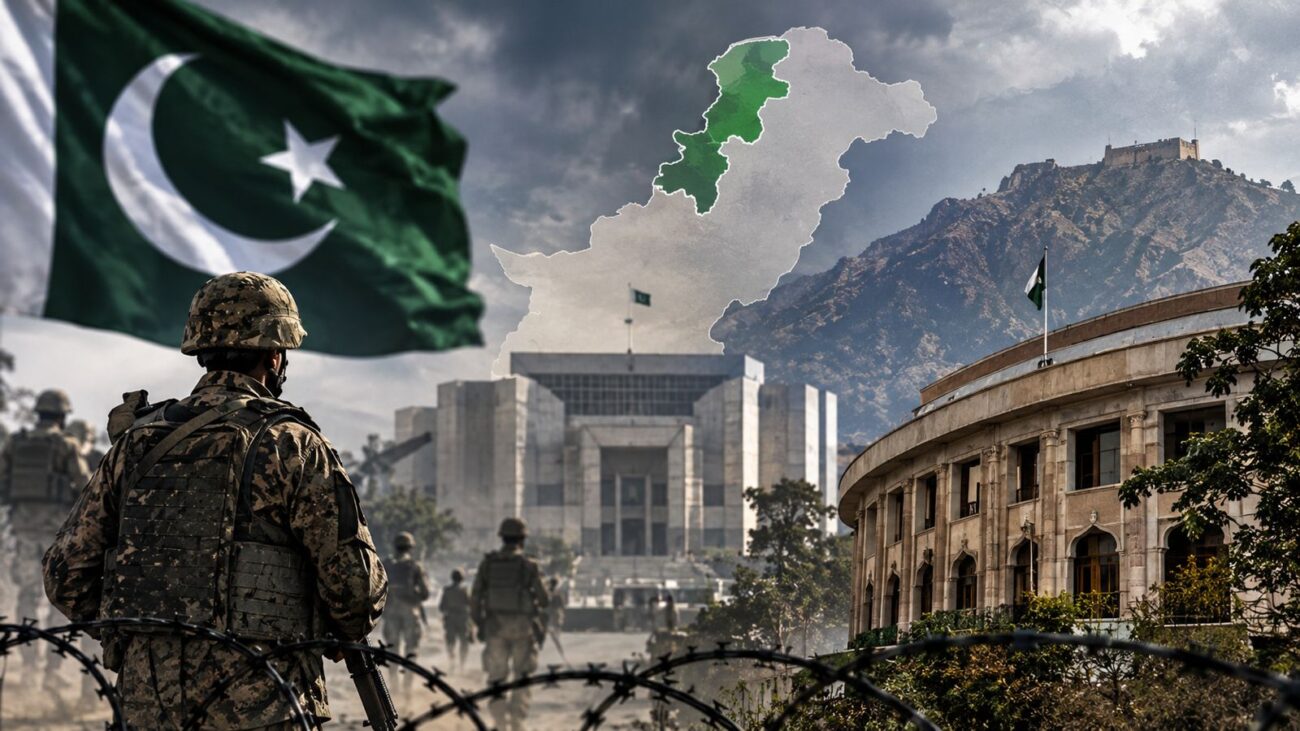
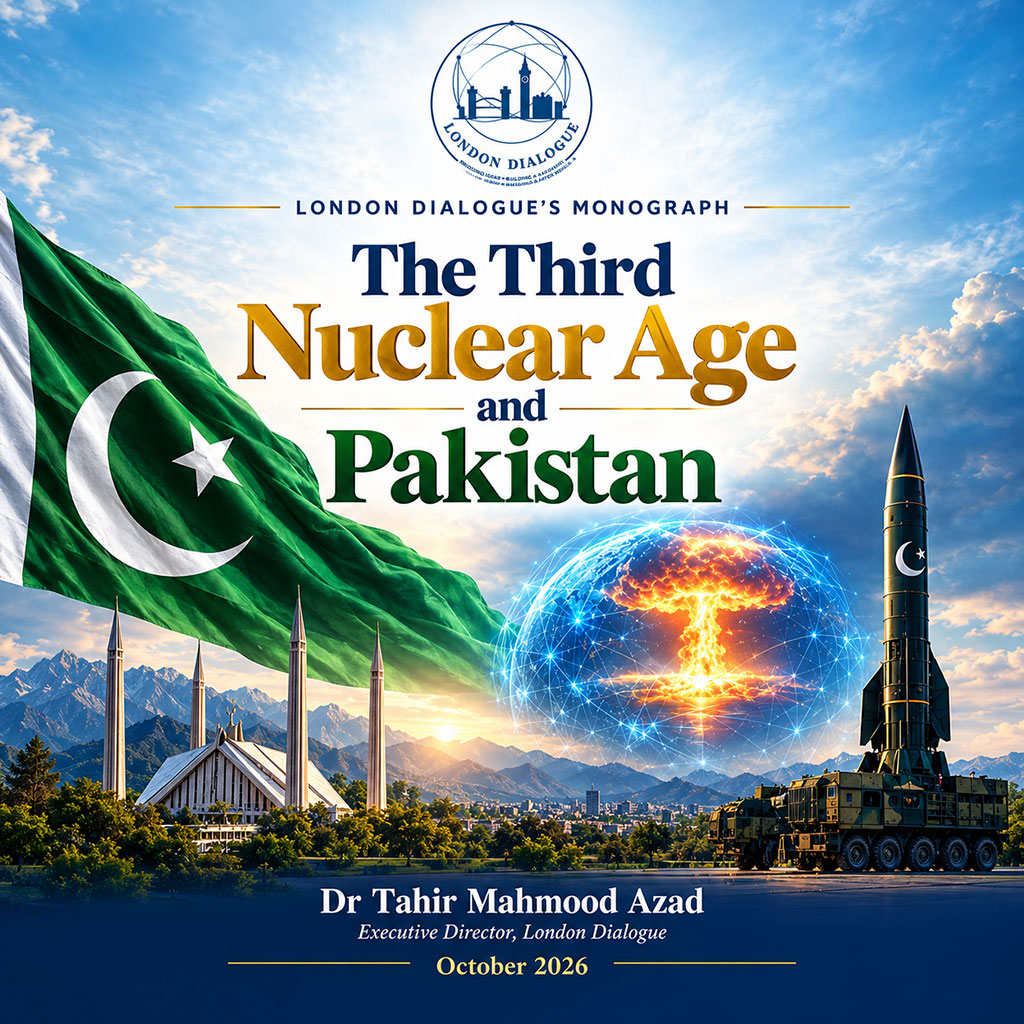
Pakistan’s nuclear programme has entered the third nuclear age with a modern and diversifying arsenal and an increasingly concentrated system of command. This monograph examines both developments and the relationship between them.
The technological transformation. Since 1998, Pakistan has moved from a small force of aircraft and early ballistic missiles to a layered arsenal spanning the 70-kilometre Nasr and the 2,750-kilometre Shaheen-III, with the Ababeel multiple-warhead programme under development and a sea-based leg advancing through the Hangor-class submarines and the Babur-3 cruise missile. A separate Army Rocket Force Command, created in August 2025, now holds conventional missiles that reach ranges once occupied only by nuclear-capable systems. Pakistan has secured access to China’s BeiDou military navigation service, launched electro-optical and radar imaging satellites in 2025, and in May 2025 fought an air battle in which Chinese-origin aircraft and missiles were linked to airborne and ground sensors through an indigenous data network. SIPRI assessed Pakistan’s stockpile at 170 warheads in January 2026, none of them were deployed.
How technology is changing nuclear thinking. These developments are shifting Pakistan’s deterrent from a minimum, opaque and largely recessed posture towards an integrated conventional and nuclear system. Entanglement between conventional and nuclear forces, compressed decision times, the vulnerability of command systems to cyber and space disruption, and a growing dependence on Chinese technology all raise the premium on clear, collegial and accountable decision-making. Technology is making the question of who decides more important, not less.
Custody and safety. Across twenty-eight years Pakistan has recorded no documented nuclear weapons accident, confirmed security breach or verified diversion of fissile material. The IAEA designated its National Institute of Safety and Security a Collaborating Centre in 2022, and the Nuclear Threat Initiative recorded successive improvements in its security rankings in 2016, 2020 and 2023. Physical custody is not the weak point of Pakistan’s programme.
The governance of command. The weak point is political control. After Bhutto, General Zia-ul-Haq took personal charge of the programme, and elected leaders were kept at its
margins after 1988. The National Command Authority of 2000 institutionalised formal civilian chairmanship over substantive military control. The 26th Amendment of October 2024 weakened judicial independence; legislation in November 2024 extended service chiefs’ tenure to five years; and the 27th Amendment of November 2025 abolished the post of Chairman Joint Chiefs of Staff Committee, made the army chief ‘Chief of Defence Forces’, created a National Strategic Command whose commander is drawn from the army on the CDF’s recommendation, and granted five-star officers rank, uniform and immunity from criminal proceedings for life. The Defence Forces of Pakistan Act and the National Command Authority (Amendment) Act of August 2026 placed the CDF inside the nuclear authority and created a Defence Forces Headquarters to advise the Prime Minister.
Why it matters. One officer now commands the conventional forces, sits in the nuclear authority, shapes the appointment of the strategic-forces commander, controls the main channel of military advice and is constitutionally protected from prosecution. This is a single point of failure in a system that other nuclear-armed states have designed to avoid one. Arrangements enacted by a government of contested mandate, without opposition participation and with retrospective effect, are also vulnerable to reversal, which makes them harder for adversaries to read. In deterrence, predictability is a form of security.
Recommendations. The monograph proposes separating conventional command from membership of the nuclear authority; legislating collegial requirements for nuclear release; establishing parliamentary oversight of nuclear governance; giving the Prime Minister an independent civilian strategic staff; requiring broad political consensus for future changes to nuclear command; renewing and publishing doctrine for the third nuclear age; extending risk-reduction agreements with India to cruise, hypersonic and space systems; and creating independent institutions for nuclear policy and diplomacy. Pakistan has built the technology and kept the custody. Governing the command under a durable and legitimate constitutional order is the unfinished task.
Read The Report here
Tahir Azad
Related posts
Can Britain Bring Iran Back to the Table?
Yemen’s Forgotten Human Rights Crisis: Geopolitical Rivalries, Maritime Security and the Cost of War
The Democratic ‘Tsunami’: What It Means for Trump’s War on Iran?
What the Democratic Sweep in the US Midterm Elections Means for Trump’s Iran Policy and Gulf Security
Breaking the Taboo: The Strategic Folly of a US Nuclear Strike on Iran
Blurred Lines: Federalism and Provincial Autonomy in Pakistan
Paper Shields: The Makkah Pact and the Hard Test of Collective Defence
Iran’s Axis of Resistance Now: Less Than an Axis, More Than Resistance?
Leading through Uncertainty: Building Resilient Interdependence in a Multipolar World
Why Does the Game of Chicken Between Iran and the United States Keep Going?

Trojan APCs: Ukraine’s Kamikaze BTR-60s in Operation Vivaldi
The Emissions We Do Not Count: Militaries and the Missing Climate Ledger
London Dialogue — Founding Statement
Publication Categories
- Analysis (117)
- Book Review (1)
- Commentary (8)
- Essay (17)
- Journal (0)
- Journal Article (0)
- Policy Brief (7)
- Policy Paper (1)
- Research Article (3)
- Research Report (6)
- Young Writers Corner (0)