International humanitarian law is built on a line. The principle of distinction requires belligerents to separate combatants from civilians and military objectives from civilian objects, and every other protection in the law rests upon it. An object is civilian, or it is military, and the law’s protections follow from the side of the line on which it sits. Iran’s 2026 crisis, which ran from the January protest blackout into the war that began on 28 February, produced an object that sat on both sides of that line at once. In doing so, it exposed how poorly the law’s central distinction survives contact with satellite connectivity.
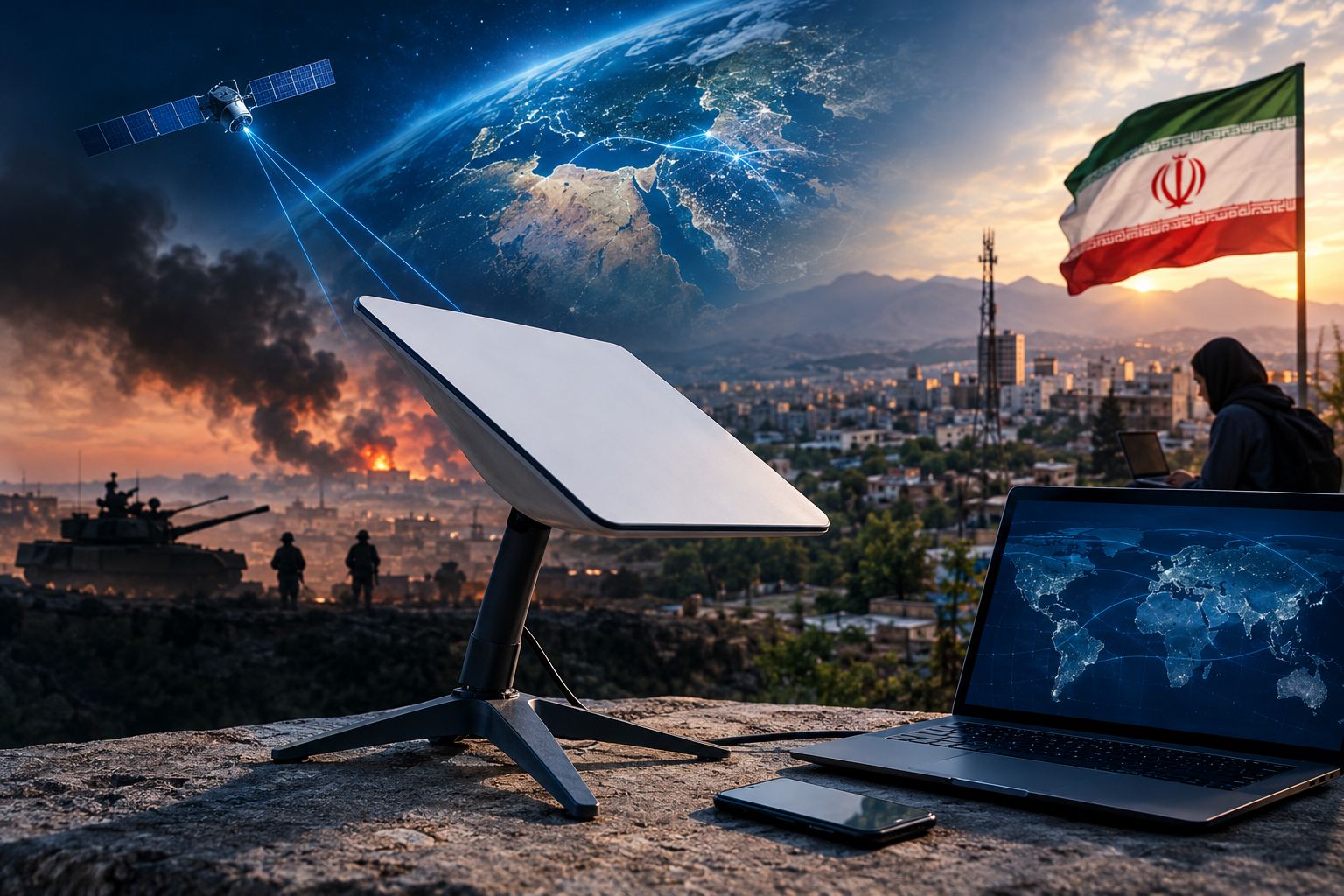
The object was Starlink, and its record in Iran is documented and, on its face, contradictory. Iran’s parliament criminalised unlicensed satellite internet after the June 2025 war with Israel. When the protest shutdown began in January, the authorities turned to military-grade jammers and spoofed GPS signals to disable terminals, and Amir Rashidi of the Miaan Group estimated that satellite internet performance fell by as much as 80 per cent in parts of the country. Once the bombing started, national connectivity dropped to around one per cent of ordinary levels, and state media reported a new wave of arrests of Starlink users. Yet during the same January blackout, Check Point Research reported that the Iran-linked Handala Hack group was routing its operations through Starlink IP ranges to target organisations across the Middle East. The state was trying to destroy a service while actors aligned with it used that service to keep operating. The terminal was contraband and infrastructure at once.
This is not a curiosity. It is a precise illustration of why the principle of distinction is straining in the satellite-connectivity era, and the problem runs deeper than any single actor’s hypocrisy. A Starlink terminal has no inherent character. The same hardware, broadcasting the same signal, is a civilian lifeline when a journalist files from a besieged city and a military asset when a command cell coordinates an operation. The law’s test for military objectives asks whether an object, by its “nature, location, purpose or use”, makes “an effective contribution to military action” and whether its neutralisation offers “a definite military advantage”. That test assumes these characteristics are stable enough to assess. A terminal’s contribution to military action can change by the minute depending on who is typing, and the belligerent deciding whether to target it cannot see who that is. It sees only the signal.
Legal commentary has so far treated the two faces of the system separately. Ashley Deeks of the University of Virginia, writing in January 2026, assessed Iran’s jamming under the International Covenant on Civil and Political Rights and judged it “probably” lawful as domestic regulation, while noting that Ukraine’s armed forces had come to rely on the same service to communicate on the battlefield and coordinate drone strikes. Those two observations describe one constellation, and within weeks the Iran war brought them together. When Tehran jammed Starlink to silence protesters and journalists, it was suppressing a civilian communications lifeline, a matter for human rights law in peacetime and for the protection of civilian objects in war. When hackers aligned with Tehran routed operations through the same network, they gave it a hostile function that any adversary could invoke to justify an attack. The constellation was simultaneously a civilian object under suppression and a potential military objective under exploitation. Both characterisations were plausible, and the law offers no settled way to hold them together.
The consequence is a protection gap that falls, as such gaps always do, on civilians. The International Committee of the Red Cross accepts that dual-use space objects may become military objectives once their military use meets the legal definition, while insisting that all foreseeable direct and indirect incidental harm to civilians be weighed. In a mega-constellation, that indirect harm is not a single dish but the service itself. A belligerent cannot strike Starlink’s contribution to an adversary’s command and control without degrading it for every hospital, aid convoy, and family within the beam. Earlier dual-use problems were bounded: a power station served both a barracks and a neighbourhood, but it was one identifiable object in one place. Satellite connectivity spreads the problem across an entire constellation and an entire population of users. Russia has already drawn the permissive conclusion. In October 2022, a Russian Foreign Ministry official told the UN General Assembly’s First Committee that “quasi-civilian infrastructure can be a legitimate target for a retaliatory strike”, a warning aimed squarely at commercial constellations supporting Ukraine.
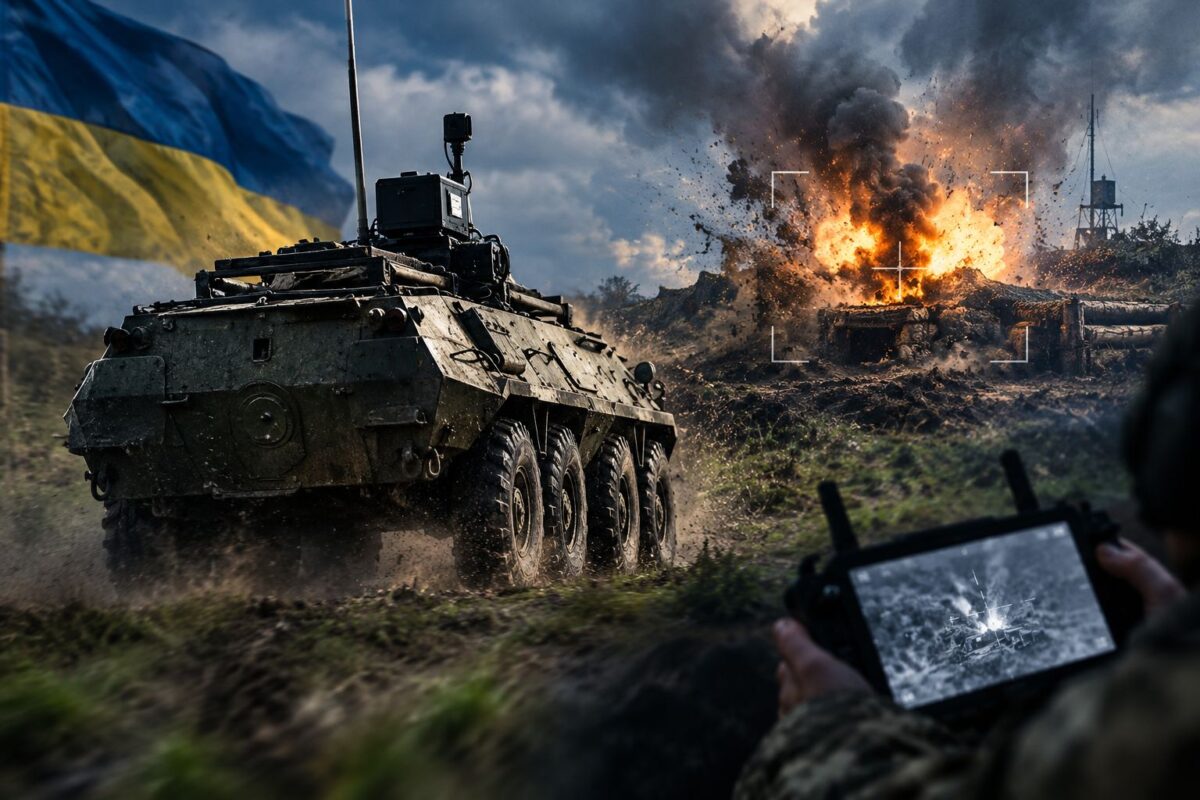
The Iran case surfaces a further complication that the law has barely addressed. The object is owned and controlled by a private company headquartered in, and answerable to, a third state. Starlink’s availability in Iran followed in part from Washington’s General License D-2 of 2022, which widened sanctions exemptions for internet services. In Ukraine, Elon Musk declined Kyiv’s emergency request to activate coverage near Sevastopol, explaining that SpaceX would otherwise be “explicitly complicit in a major act of war”. In February 2026, Ukraine’s Ministry of Defence introduced a whitelist under which verified terminals stayed online while Russian-used terminals were blocked. In each case, the character of the network was set not only by its users and jammers but by a company and a government outside the immediate fight. The principle of distinction assumes that belligerents classify the objects they confront. Here the pivotal object was governed by commercial discretion that could switch the service between lifeline and liability for millions of people, with no legal framework governing that choice and little accountability for its exercise.
None of this is resolved by insisting, correctly, that the law already covers dual-use objects. It does in principle. The difficulty is that its tools (assess the object’s use, weigh military advantage against civilian harm, apply proportionality) were designed for objects whose use is legible and bounded. They buckle when the “object” is a constellation serving a whole population whose military and civilian uses are interleaved in real time and invisible from outside. The Iran crisis did not break the principle of distinction by violating it. It strained the principle by presenting a case the principle struggles to parse: an object that was genuinely, simultaneously, and inseparably both.
The practical path forward is not a new treaty, which the states with the relevant capabilities will not sign, but a narrower clarification built on existing text. Article 52(3) of Additional Protocol I already provide that, in case of doubt, an object “normally dedicated to civilian purposes” is presumed not to be making an effective contribution to military action. States should affirm that satellite connectivity serving a substantial civilian population falls within that presumption and that an adversary’s incidental military use does not automatically rebut it, precisely because the harm of treating the network as a military objective falls overwhelmingly on civilians who cannot be separated from the military user. The Ukrainian whitelist suggests a corollary: where operators can disable specific terminals, belligerents should be expected to pursue that user-level route before contemplating any attack on the system itself. The customary status of the presumption remains contested, notably by the United States, and the standard will be resisted. But the alternative, the one the Iran crisis has left us with, is a world in which every civilian’s satellite lifeline is one adversary’s login away from becoming a legitimate target, and the law shrugs because the terminal was, after all, both.
Aleena Saif Ullah is an MPhil scholar in the Department of Political Science at the University of the Punjab, Lahore, Pakistan.