


Publications
Essay Series
Essay /009/September/2026/London-Dialogue. 24 September 2026
Author: Dr Hichem Karoui
Abstract
The most striking paradox of the 2026 war was not that the United States and Israel could strike Iran at will from the air, but that repeated demonstrations of superiority failed to secure political submission. The central claim is that the coalition fought for military decisions while Iran fought to impose costs: not merely different strategies, but different grammars of war. What follows examines how overwhelming force became strategically self-limiting and why escalation itself turned into a mechanism of entrapment.
The Paradox of Dominance
By conventional measures, the balance at the war’s opening looked profoundly uneven. American and Israeli forces held air superiority, deep intelligence, long-range strike systems, cyber-penetration tools and the logistical depth to sustain a tempo no regional power could match. Iran faced attrition of fixed infrastructure, severe surveillance exposure and the shock of leadership decapitation. Yet the early asymmetry concealed a deeper reality: the stronger coalition was optimised to destroy assets, while Iran was organised to survive punishment and convert endurance into leverage, a disposition forged in the long Iran–Iraq War chronicled by Pierre Razoux. Battlefield asymmetry did not produce political asymmetry. The coalition could hit more targets; Iran could shape more consequences.
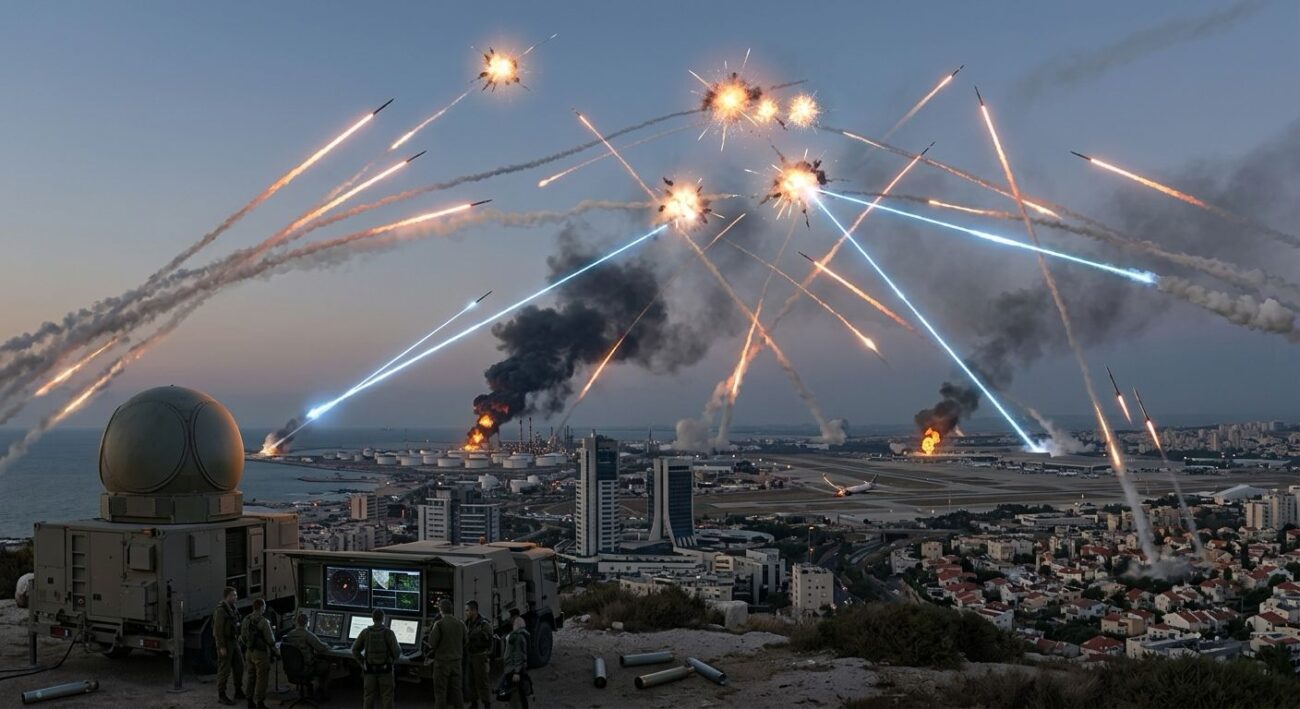
This is the essence of the superpower trap. A dominant actor enters a crisis believing escalation strengthens its bargaining power because it widens the coercive-capacity gap. That assumption, central to Thomas Schelling’s account of coercive bargaining, holds only if the weaker side values avoiding damage more than the stronger side values restoring order. In 2026, that relationship broke down. Iran did not need to defeat American forces; it needed only to show that continued pressure would generate costs beyond what Washington and its partners were politically prepared to absorb. Every additional strike, however successful, created fresh openings for retaliation through shipping disruption, missile harassment, cyber interference, militia mobilisation and energy-market panic. Superiority remained real, but it became strategically congested.
Coercion by punishment succeeds only under narrow conditions: the target must believe that further resistance will make its position intolerably worse, that concessions will bring meaningful relief, and that its governing structure will survive compliance. Iran had reason to doubt all three. A state that had already lost its supreme leader and absorbed the opening wave of a high-intensity air campaign could plausibly conclude that submission offered no guarantee of regime security, so defiance became a survival strategy rather than bravado. Precision strikes compounded the problem: they can destroy command nodes and launch sites without communicating a limited bargain, and to a recipient in the fog of crisis they may signal a widening campaign aimed at collapse. Once the stronger side intends controlled coercion while the weaker side reads existential war, the logic of calibrated violence begins to erode.
How Escalation Becomes a Cage
An escalation trap emerges when each attempt by a stronger power to restore deterrence creates new vulnerabilities the weaker actor can exploit more cheaply. The dominant side has more options, but not all are useful. It can strike deeper, harder, and more often, yet each choice broadens the theatre of risk: commercial shipping needs protection, regional bases need more missile defence, partner governments need reassurance, energy markets need calming signals no commander can deliver, and domestic audiences need evidence that force is producing a pathway to resolution rather than an open-ended liability. Escalation multiplies obligations faster than it reduces resistance.
For Iran, the calculus was simpler. It needed neither symmetry nor air parity, only enough launch capacity, proxy connectivity, cyber access and maritime disruption to ensure the coalition could not confine violence to Iranian territory. The stronger side sought to localise the war by striking targets; the weaker side sought to regionalise it by connecting every strike to wider consequences. Once insurance rates rose, tankers slowed, markets convulsed, and partners braced for spillover, the meaning of each bombing run changed: success was measured not by infrastructure destroyed but by whether an action reduced or increased aggregate strategic exposure.
The United States and Israel retained what strategists call escalation dominance, the ability to raise the level of kinetic punishment beyond anything Iran could answer in conventional form. But escalation dominance is not outcome dominance. It determines who can intensify violence, not who can translate it into a preferred settlement. Destroying another air-defence battery did not reopen shipping lanes, reassure Gulf monarchies or lower oil prices. This exposed a common analytical error, the confusion of capacity with utility: against a dispersed, ideologically hardened adversary, physical destruction may remove capability at the margin while strengthening resolve, decentralising operations and internationalising the conflict, tempting the stronger actor to escalate further to compensate for disappointing effects and so feeding the very dynamics that, as studies of how the weak win wars show, make coercion fail. The trap lies not in weakness but in misusing strength.
The Limits of Air Power and Precision
Precision warfare encourages an illusion of controllability. If munitions can be directed with extraordinary accuracy, leaders may infer that they can manage escalation with the same precision. But the accuracy of a weapon and the predictability of a war are different things. In 2026, precision attacks on leadership, infrastructure, and logistics did not produce a cleanly bounded battlespace; they interacted with networks of shipping, finance, energy dependency, sectarian militancy, cyber vulnerability, and alliance anxiety. The missile was accurate; the political environment was not. Air power is especially prone to this mismatch because it magnifies what can be destroyed quickly while obscuring what cannot be compelled quickly. It excels at suppression and demonstration; it is far less reliable at dissolving ideological commitment or forcing a state under existential pressure to negotiate on unfavourable terms.
Iran’s answer lay in exploiting distributed vulnerability. Rather than defend every site against every strike, it structured retaliation around the fact that modern regional systems are hard to seal: tankers transit narrow waters, ports depend on digital coordination, and desalination plants, pipelines, airbases and export terminals concentrate critical functions, while militias can generate uncertainty even where their military effect is small. This was the kind of asymmetric naval doctrine Iran had rehearsed for decades. A superpower can defend many points, but not all points all the time, and not without heavy financial and political strain. Iran did not neutralise American striking power; it diluted its meaning by keeping the theatre porous. Even intermittent attacks or credible threats complicated convoy planning, missile-defence allocation, investor confidence and diplomatic messaging. Their value lay in forcing the coalition to spend more preserving normality than Iran spent disrupting it. Once that ratio turned unfavourable, the burden of proof shifted from the weaker actor, which merely had to survive, to the stronger actor, which had to show that more force would improve the picture.
Political Time and Strategic Endurance
Time was another dimension of the trap. Strong powers assume speed favours them because they can mobilise strike packages quickly and impose visible destruction before an adversary adapts. Speed matters militarily, but political endurance runs on a different clock. Democracies operating amid saturated media, alliance commitments, market sensitivity and election cycles face pressure for rapid, legible success. Adversaries fighting for regime survival define success more minimally: endure, retaliate, remain sovereign and deny the enemy closure. Iran’s leadership had spent decades preparing for a war it could not win conventionally, expecting not operational brilliance in a short campaign but cumulative advantage through resilience. The coalition, by contrast, needed a result its publics, partners and markets would recognise as effective. Merely degrading Iran was insufficient while shipping stayed threatened, proxies stayed active, and oil prices stayed high. The weaker actor could treat time as an ally even amid heavy losses; the stronger actor experienced time as a tax.
Superpowers are judged not only by what they destroy but also by what they restore. The relevant measure of success was not sortie count or command disruption but whether force reopened trade routes, reassured partners, re-established deterrence, and kept the war from widening, outcomes that depended on many actors beyond the target set. Iran, meanwhile, could claim effective resistance simply by showing that the war was still producing expensive instability. That asymmetry of expectations explains why superior powers appear frustrated even when operationally effective: their standard for success is comprehensive, the weaker side’s is negative and denial-based. Partial restoration looked like failure; survival amid ruin looked like vindication. Observing states did not ask who could destroy more but who could impose costs, absorb pressure, and still shape regional choices; on that measure, the coalition’s triumphs looked less decisive than they should have.
Why More Force Produced Less Leverage
A threshold exists beyond which additional force stops adding leverage and instead advertises strategic uncertainty. If early strikes do not compel, leaders tend to broaden target lists, raise tempo, and hunt for a decisive node whose destruction might break resistance, an approach that often signals desperation rather than confidence. It tells the adversary that the coercive message was misunderstood and that the stronger side lacks a theory of victory beyond doing more of what has not worked. Each new wave also carries real costs: more defensive deployment, more diplomatic management of uneasy partners, more interception expenditure, more tolerance of accidental spillover, and more risk of regional outrage where civilian or economically sensitive sites are hit. Coercion depends on a credible link between violence and a pathway to de-escalation; once violence accumulates without a persuasive exit, the enemy’s incentive shifts from compromise to endurance.
This is the war’s central divergence. Military decision seeks to destroy or threaten enough of the enemy’s core capacity to shape political choice directly. Cost imposition seeks to make continuation of the stronger party’s preferred course disproportionately expensive, even when the weaker actor suffers far greater physical damage. In a world of precision missiles, drones, cyber disruption and chokepoint economics, cost imposition often offers the weaker actor a shorter path to strategic effect than military decision does for the stronger one. The coalition’s operational metrics and Iran’s strategic metrics did not intersect. Washington and Jerusalem could point to degraded launch sites and attrited command infrastructure; Tehran could point to elevated insurance premiums, disrupted maritime traffic, rising energy prices, stressed alliances and mounting American expenditure. Both descriptions were true, but only one addressed whether the war was moving toward a stable and favourable political outcome. Once the contest became one over who could bear and impose costs longer, raw superiority lost much of its expected decisiveness.
Lessons for the Study of Power
The 2026 war illustrates a broader shift in the study of power. In highly connected theatres, compellence becomes harder because the target can externalise the costs of punishment into the surrounding system. Energy corridors, digital networks, financial expectations and partner insecurities offer routes for indirect retaliation that need no parity in conventional force. Aggregate power still depends on preserving regional and economic normality, so the weaker actor can attack not only military assets but also the conditions under which military success becomes politically meaningful. For analysts, the implication is to stop evaluating coercive campaigns mainly through destroyed platforms and to examine risk distribution, economic contagion, alliance anxiety and the adversary’s capacity for decentralised retaliation. The question is no longer whether a superpower can strike effectively; it almost always can, but whether striking improves the larger strategic equation faster than the enemy can degrade it indirectly. Where the answer is no, superiority becomes a burden as much as an asset.
The enduring lesson is not that American power has evaporated, nor that military strength no longer matters, but that dominance without prudence can produce stalemate when the weaker actor has prepared to weaponise vulnerability across a connected region. A superpower that assumes escalation is inherently coercive may find that each increment of force widens the theatre of liability. The decisive skill is not the ability to destroy more but the judgement to recognise when destruction yields less leverage than restraint, adaptation, or political repositioning. The superpower trap is, in the end, a failure of translation: material superiority existed but could not automatically convert into compliance, reassurance or order. Iran’s achievement was not victory in the conventional sense but a demonstration that a middle power, using distributed tools and a calibrated tolerance for pain, could turn the stronger side’s escalation options into strategic friction. Force can remain overwhelming while becoming politically inefficient. The age of superpower freedom of action has not ended, but it has narrowed, and in that narrowing lies the central strategic fact of the asymmetric century.
Dr Hichem Karoui
Related posts
Rivers as Leverage: India’s Suspension of the Indus Waters Treaty and the Logic of Hydro-Coercion in South Asia
Iraq After Operation Inherent Resolve: Testing Security and State Control
The Electrostate Thesis: Geopolitics, Clean Energy Dominance, and China’s New Global Leverage
A Last Open Letter to President Mr D. J. Trump
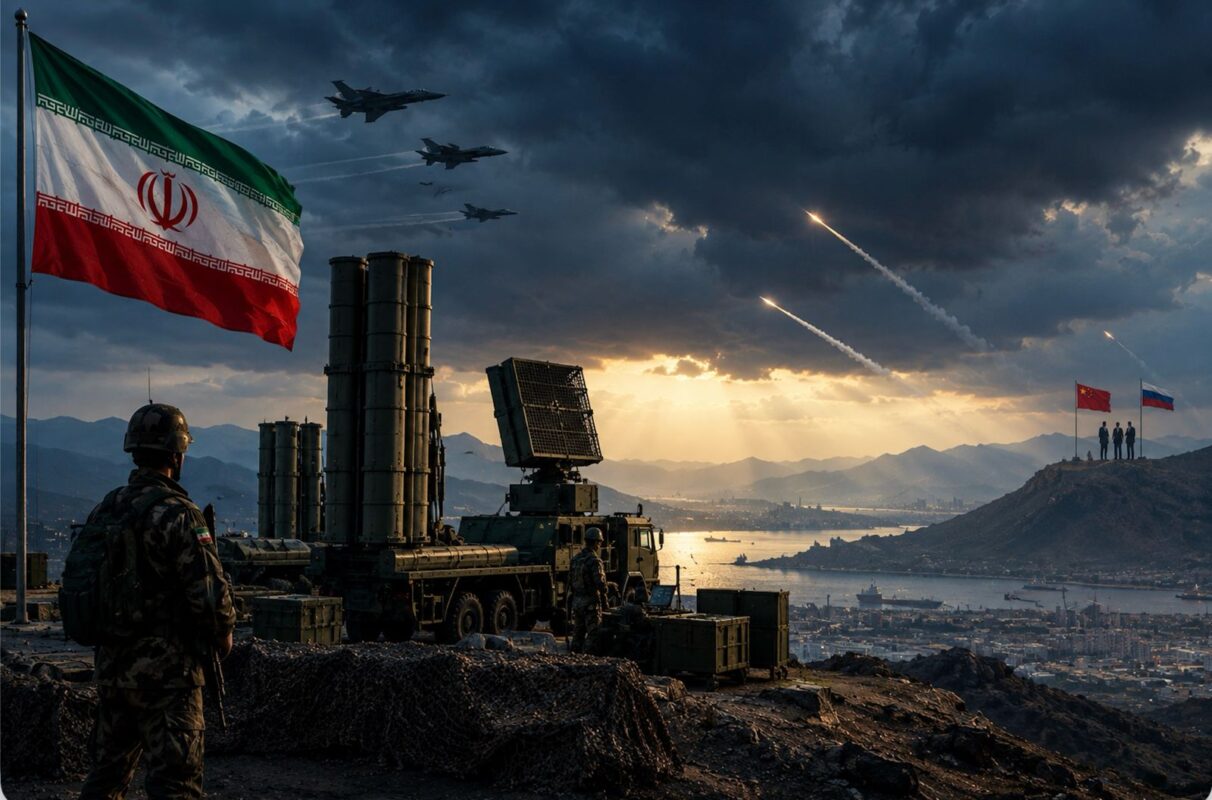
Iran’s Reliance on “Self-Defence” in the Shadow of “Strategic Loneliness”
From Chokepoint Diversification to Coupling: Hormuz, Bab al-Mandab and the New Fragility of Gulf Energy Security
Imran Khan’s Solitary Confinement and the Mandela Rules
The South Atlantic Flashpoint: Argentina Tests Britain, Chile, and the US
Religious Rhetoric Around the Mecca Defence Agreement and Its Long-Term Impacts for Pakistan
Operationalising The Maritime Dimension Of The Makkah Joint Defence Agreement
The Arithmetic of Saturation: What the Iran War Taught About the Limits of Layered Air Defence
Beyond the Mecca Accord: Why Pakistan Must Choose Deterrence over Entanglement in Yemen
London Dialogue — Founding Statement
Publication Categories
- Analysis (102)
- Book Review (1)
- Commentary (6)
- Essay (9)
- Journal (0)
- Journal Article (0)
- Policy Brief (6)
- Policy Paper (1)
- Research Article (2)
- Research Report (5)
- Young Writers Corner (0)