Analysis Series
Analysis/0091/September/2026/London-Dialogue. 26 September 2026
By Muhammad Waqas Haider
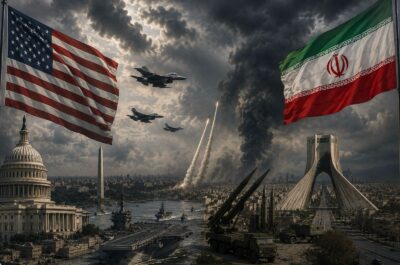
The missile exchanges between Iran and Israel across 2024, 2025 and into 2026 have produced the most consequential body of operational data on integrated air and missile defence in a generation. Stripped of the competing claims of the belligerents, the engagements amount to a controlled experiment in a question every air arm must now confront: what happens when a layered defensive system, however sophisticated, is made to absorb more incoming mass than its magazines and its budget can sustain? The answer is not that interception fails. On the contrary, the interceptors mostly worked. The answer is that interception can succeed tactically while the defender loses the exchange it is actually fighting: a contest of cost and industrial capacity rather than missiles against interceptors. That distinction is the analytical heart of the war, and it now rests on far more evidence than it did a year ago.
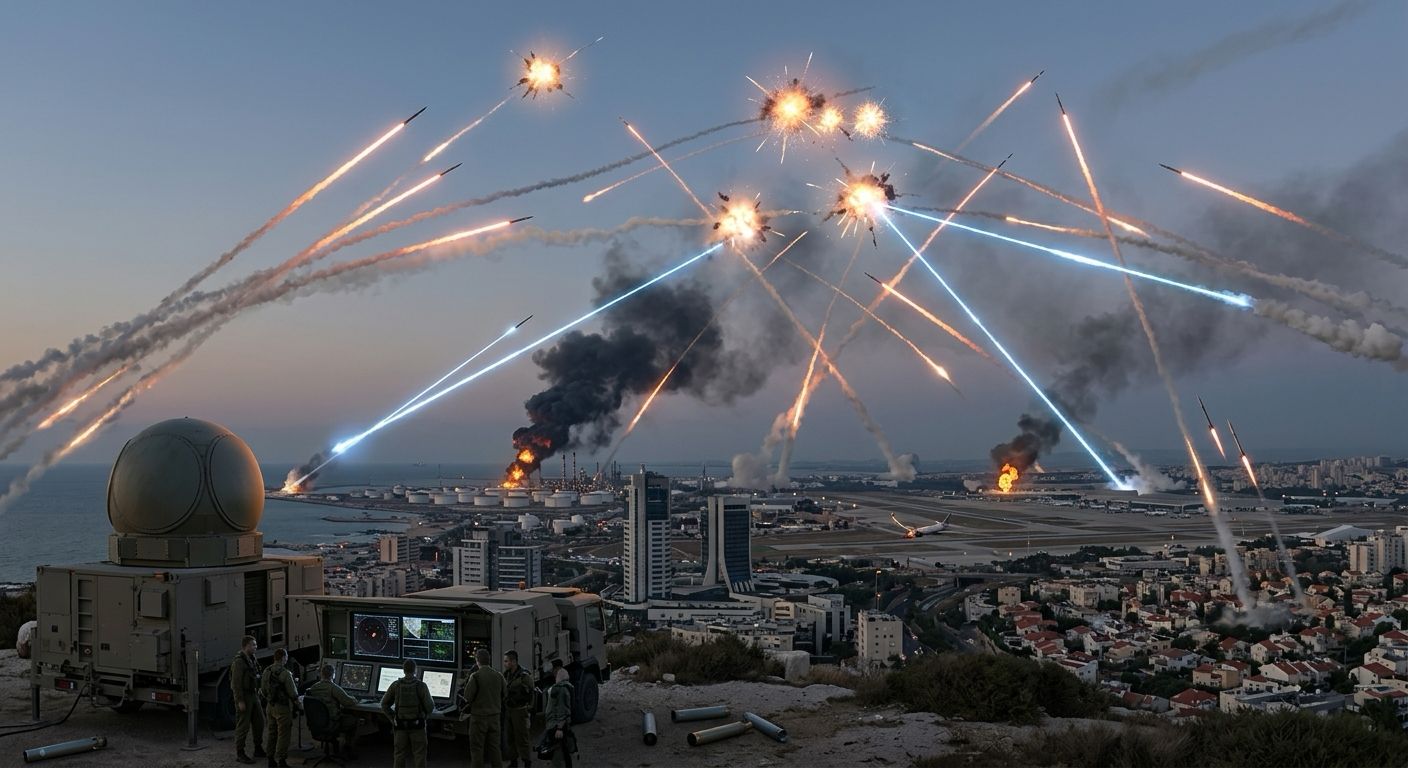
Consider the performance first, on its own terms. Israel entered these exchanges with the most elaborate layered architecture ever fielded, an exo-atmospheric tier of Arrow-3 interceptors, an endo-atmospheric tier of Arrow-2 and David's Sling, the Iron Dome for shorter-range threats, and, from the end of 2025, a directed-energy layer. Against individual ballistic missiles, the system performed broadly as designed, and Israel reported interception rates in the high eighties to low nineties during the 12-day war of June 2025. Yet the raw percentage conceals the problem rather than revealing it. An interception rate of 86%, the figure most independent assessments settled upon for that campaign, still meant that dozens of ballistic missiles reached populated areas. A shield that stops the overwhelming majority of an attack can still admit enough of it to kill, to burn an oil refinery and to close an airport. Against a small, disciplined salvo, a high interception rate is decisive. Against a large one, the same percentage is a euphemism for leakage.
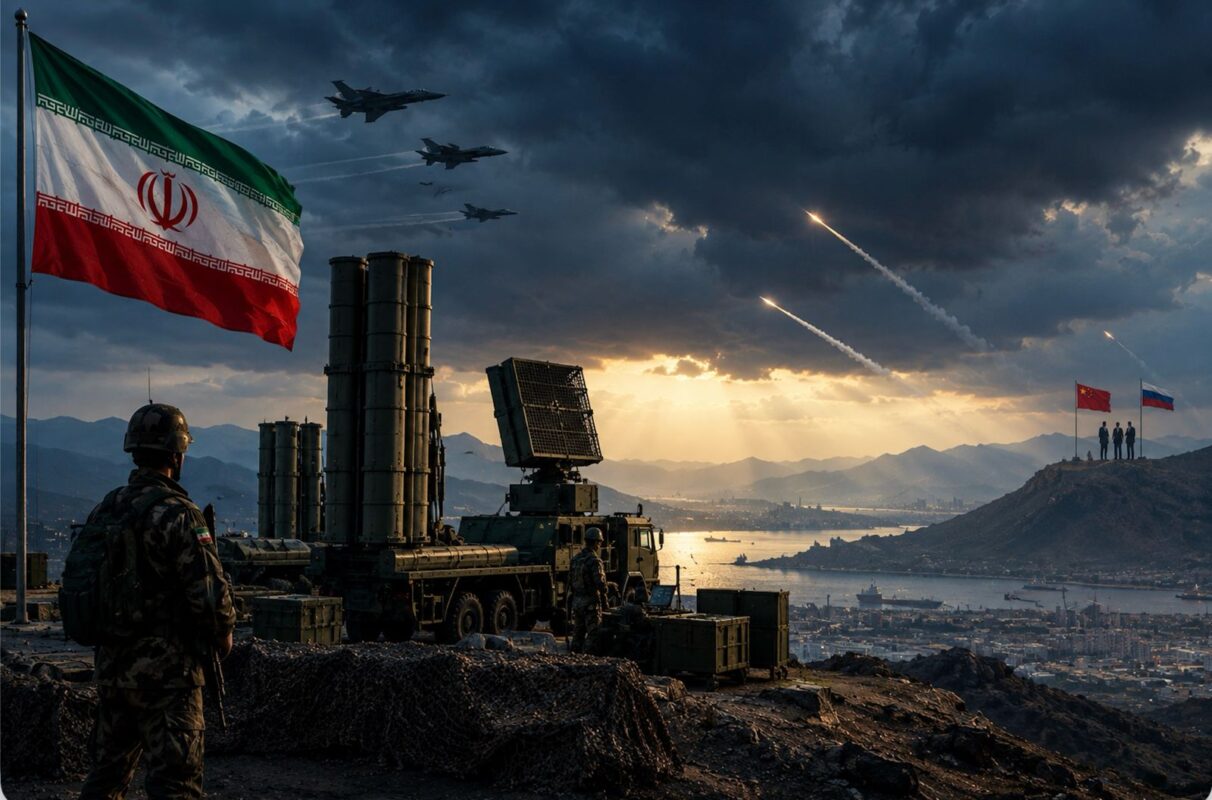
That is the first of the war's three lessons, and it is a matter of arithmetic before it is a matter of technology. When Iran moved from the measured salvos of 2024 to what analysts termed volumetric saturation, firing well over a hundred heavy missiles in a single wave, it was not trying to defeat the interceptors on quality. It presented more simultaneous targets than the engagement cycle could service, so leakage rose not because any interceptor failed, but because there were too few interceptor channels to go round. The effect was compounded by design, since decoys, manoeuvring re-entry vehicles and cluster warheads forced defenders to expend several interceptors against a single incoming threat, and even the upper tier was not infallible, with a preliminary Israeli investigation finding that THAAD had failed to engage missiles that struck Dimona and Arad in the renewed fighting of early 2026. A defence that is 90% effective against 10 missiles is having a good day. The same defence against 600 is admitting 60.
The second lesson is economic, and it is where the war overturns a long-standing assumption. Defensive success in these exchanges was not free; it was ruinously expensive, and the cost fell on the defender rather than the attacker. Each THAAD interception cost about $13 million, while the ballistic missiles it engaged could be built for a fraction of that and the drones in the mix for a few tens of thousands, so the U.S. spent more than a billion dollars on interceptors during the 12 days of June 2025 alone. This is the inversion that matters. In a contest where the interceptor costs many times more than the weapon it destroys, the defender can win every engagement and still lose the war, because it is funding its own exhaustion at an unsustainable ratio while the attacker refills cheaply. The strain was political as much as fiscal, with Israeli finance and defence ministries reportedly divided over the cost of a new interceptor production line, and with the cheaper David's Sling pressed into service against threats it was never designed for in order to conserve the scarcer Arrow rounds.
The third lesson follows directly and is the least visible from a distance: magazine depth. Interceptors are not only expensive but also slow to build, and the war consumed them faster than any industry could replace them. By some accounts, Israel had expended more than 81% of its Arrow interception stock before the June war ended, and the United States, reinforcing its ally, fired an estimated 100 to 150 THAAD rounds, roughly a quarter of its entire national stockpile, in support of a single campaign. The Royal United Services Institute captured the point precisely, framing the conflict as a test of the coalition's ability to sustain its inventories and arguing that endurance in such a war depends on what it calls command of the reload.
Since Western production runs to only a dozen or two such interceptors a year, replacing what was fired in 12 days is a task measured in years, not months. For balance, Israeli officials publicly dismissed talk of an imminent shortage, and a December 2025 agreement to expand Arrow production suggests the problem is being addressed, not ignored. But the structural fact is unaltered, and it is sobering: the wealthiest defence establishments on earth discovered that their magazines emptied faster than they could be filled.
Two responses have emerged from the campaign, and both are instructive precisely because neither is a complete answer. The first is the turn toward directed energy. Israel's Iron Beam, a hundred-kilowatt laser delivered to its air force at the end of December 2025 and used in combat for the first time against rockets and drones from Lebanon in March 2026, engages threats for a marginal cost of only a few dollars of electricity per shot, against the tens of thousands of dollars a conventional interceptor costs. Where it works, the economics are transformative. But it does not resolve the arithmetic so much as bound it at the cheap end. A laser of this class reaches only some seven to 10 kilometres; it is confined to rockets, drones and short-range threats rather than the high-end ballistic missiles that do the real damage; and because each emitter covers so small an area, national coverage would require hundreds of them. Directed energy changes the cost of stopping the cheapest threats. It does nothing to refill an Arrow magazine.
The second response is the attacker's own lesson, that dispersing fire in time and space eases the defender's burden and that concentration is what breaks a shield, a point that cuts both ways and rewards whichever side can mass its fires at the decisive moment. Neither response escapes the underlying truth the war has exposed. A layered air defence system remains indispensable, and nothing here argues otherwise, for the states that possessed one suffered far less than they would have without it. But the comforting belief that a sufficiently good shield renders an adversary's missile force irrelevant has been retired, because that shield can be saturated by mass, bankrupted by cost, and emptied by attrition faster than it can be refilled, and a capable opponent will attack all three vulnerabilities at once rather than the interceptor's hit probability. The strategic implication is that air defence can no longer be conceived as a purely defensive investment measured by interception rates. It must be understood as one half of a cost-exchange contest, in which magazine depth, production capacity, the price ratio between interceptor and threat, and the ability to deny an adversary the concentration it needs matter every bit as much as the accuracy of the missile. For any state that has staked its security on a defensive shield, and above all for those without superpower magazines to draw upon, that is the uncomfortable arithmetic the Iran war has now made impossible to ignore.