

Publications

The Anatomy of a Shortfall: Europe’s Nine Capability Areas and the Lessons for Pakistan

Picture of Muhammad Waqas Haider

Muhammad Waqas Haider

Analysis Series

Analysis/0077/September/2026/London-Dialogue. 04 September 2026

Author: Muhammad Waqas Haider

A great power bloc has a peculiar candour in publishing, in a single document, the list of things it cannot yet do. The European Union's White Paper for European Defence, subtitled Readiness 2030 and released in March 2025, is such a document. Framed as a blueprint for the ReArm Europe plan and a once-in-a-generation surge in defence investment, it is at heart an act of institutional self-examination, an admission that decades of the peace dividend have left the continent unable to defend itself without help. Its most analytically revealing feature is not its financial architecture, striking though the headline figures are, but its enumeration of the priority capability areas in which Europe judges its shortfalls most acute. That list has a small but instructive history. The White Paper's prose named seven domains, yet the tally agreed by the European Council and carried into the Commission's subsequent defence roadmap expanded to nine, adding ground combat and maritime capabilities to the original set. That a supposedly technical list of gaps grew by political negotiation, rather than by fresh strategic discovery, is the first thing worth noticing, because it signals that these areas are as much a bargain among governments as a clean assessment of need. Read carefully, the nine are less a procurement catalogue than a mirror. They reflect what Europe has learnt from the war on its borders, what it has quietly depended upon others to provide, and what its politics could agree to prioritise. For a middle power such as Pakistan, watching a wealthy bloc confront a capability crisis in public is an unusual gift, because the diagnosis is transferable even where the resources are not, and one of its warnings applies to Islamabad with uncomfortable precision.

A List That Looks Backward More Than Forward

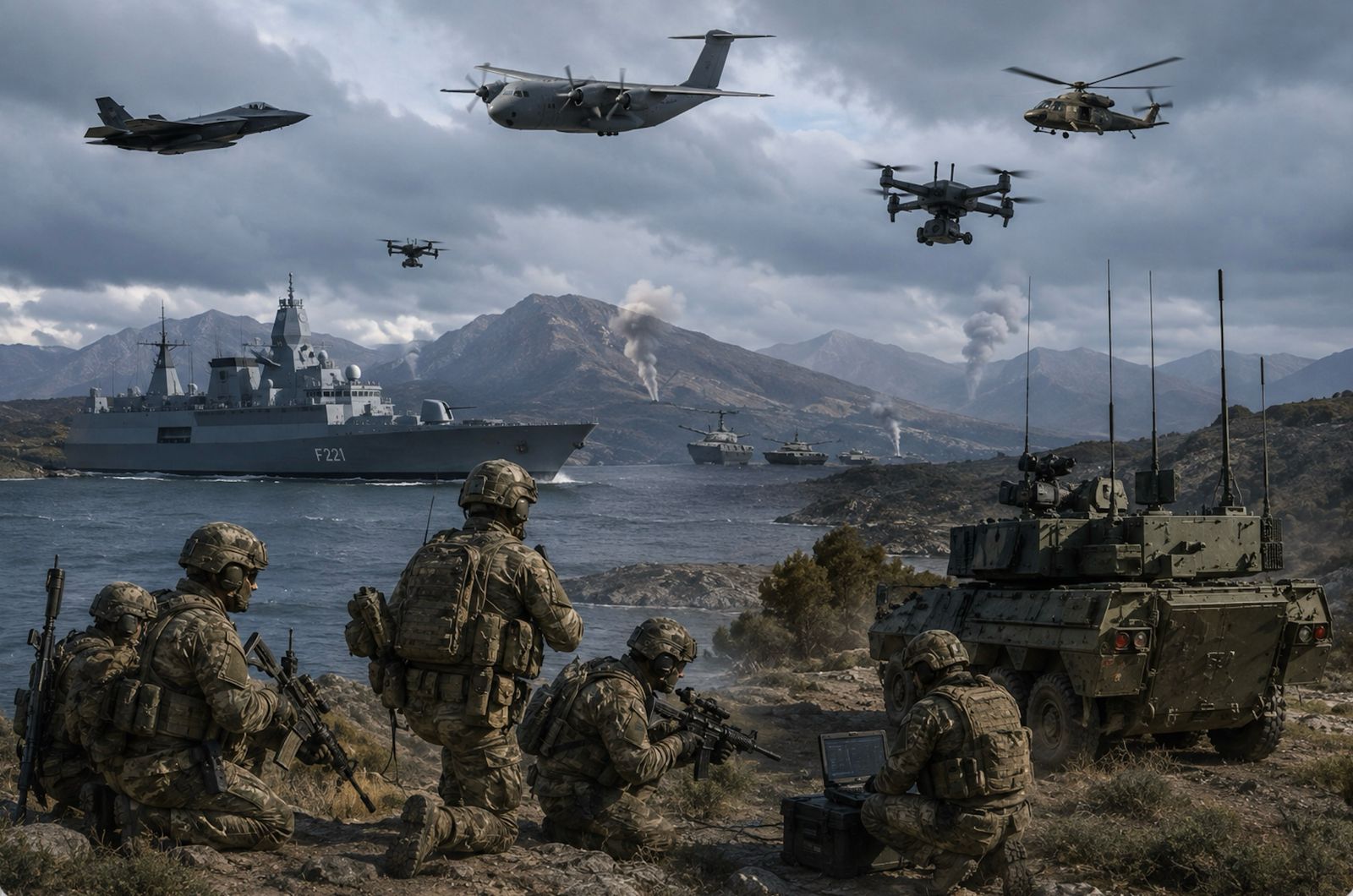
The nine areas fall into three unequal groups. The first and, much the largest, is the warfighting core: air and missile defence, artillery systems, missiles and ammunition, drones and counter-drone systems, and, in the enlarged list, ground combat and maritime capabilities. Six of the nine, in other words, concern the direct application or absorption of force, and they are almost line-for-line the lessons of Ukraine reverse-engineered, the recognition that industrial-age mass has returned to the battlefield and that Europe’s stocks, magazines, land and naval forces are inadequate to it. The war has produced an operational dataset that European planners cannot pretend not to have read. The second and far smaller group is the enabling core, comprising strategic enablers and military mobility, the unglamorous sinews without which the sharp end cannot function. The third group is a single entry: the composite domain of cyber, artificial intelligence, and electronic warfare, in which Europe gestures toward the technologies that may decide the next war rather than the last. The imbalance is the argument. A list weighted six to one toward replenishing conventional mass over investing in the technologies of the coming fight is prudent insurance against the war Europe has just watched but a thin hedge against the one it has not. It is, on its own, a commentator’s admission, an imperfect taxonomy, in which one heading covers an entire domain, such as the maritime, while other names a single class of weapon.

The Domain that is Missing

An airman notices a further absence before anyone else, and it is a revealing one. Air combat, the contest for control of the air itself, appears nowhere as a priority capability area in its own right. Air power is present only obliquely, folded into air and missile defence, which is inherently defensive, and into the enabling functions of transport and refuelling. This is less an oversight than a reflection of where Europe believes its urgent risks lie: on the ground against a mass land threat and at sea against sabotage and interdiction, rather than in a contest for air superiority that it has long assumed the United States would help it win. It is worth recalling that the European Defence Agency’s own 2023 capability priorities had listed air combat platforms and weapons explicitly. Their quiet demotion in the 2025 list suggests that Europe is planning, consciously or not, for a war in which someone else still owns the sky. For a practitioner, that assumption is the most fragile line in the entire document.

The Tell in the List

If one area deserves the analyst’s attention above the others, it is strategic enablers, because it is there that the White Paper comes closest to naming Europe’s true predicament. The category is a catch-all, reaching in its own description from strategic airlift and air-to-air refuelling to maritime awareness, combat capabilities and border security. Beneath the breadth lies a precise inventory of the capabilities that the United States has supplied to European militaries for decades and that those militaries never built for themselves. Analysts at Bruegel have made the point with unusual clarity, defining strategic enablers as the enabling capacities that cannot easily be provided at the national level and noting that European incentives remain too small to coordinate the provision of assets such as military satellites. The dependence is not marginal. Europe has relied on Washington not only for deployable troops but for command and control, satellite-based intelligence, and the development of its most expensive systems, the very backbone of a functioning force. The inclusion of this area in a list of shortfalls is therefore an admission dressed as a priority. Europe is attempting, belatedly and at great cost, to reconstitute the enabling layer whose absence made its strategic autonomy a fiction. That is the single most important sentence the White Paper does not quite write, and it is the one a careful reader should underline.

Why the List is the Easy Part

A capability list, however honest, is the easy part of rearmament. The harder problem, which the White Paper acknowledges but cannot solve on its own, is structural. Europe’s defence effort is fragmented to a degree that would be comic were it not dangerous. European members of NATO operate some twelve different main battle tank platforms, whereas the United States operates one, and the largest spenders procure the great majority of their equipment nationally, because a defence budget is also an employment programme and an instrument of domestic patronage. The Draghi report catalogued the consequences: an industry too small and too parochial, with defence research and development a fraction of the American figure. This is a collective-action problem of the classic kind, in which conduct that is rational for each government is ruinous for the whole.

The economic remedy is well understood: combining integrated markets with scaled-up procurement could plausibly halve the unit cost of European equipment, yet the political economy of national preference resists it at every turn. This is why the White Paper’s money, the headline of up to eight hundred billion euros in mobilised spending and a joint borrowing instrument, is necessary but not sufficient. Cash poured into a fragmented market inflates prices rather than capability. The nine areas will be filled well or wastefully, depending on whether Europe can do what its own structure resists most: act collectively against the gravity of national interest. On the honest reading, the White Paper is a superb diagnosis attached to a treatment the patient may decline to take.

What Pakistan Should Take from a European Document

None of this is European trivia for a Pakistani reader, because the White Paper offers at least four lessons that travel. The first is methodological. There is real discipline in publishing a finite, prioritised audit of capability gaps and binding it to a funding mechanism, and even the visible untidiness of a list that grew from seven to nine is instructive, since it shows how readily strategic prioritisation bends to political accommodation. Pakistan conducts its capability planning almost entirely out of public view, and while its strategic culture will not, and arguably should not, mirror European transparency, the underlying method of ruthless prioritisation tied to industrial planning is one from which any air staff would benefit. The second lesson is the sharpest, and it is a warning read in a mirror. Europe’s crisis is, at its core, a crisis of enabler dependency: the discovery that a force reliant on a single external patron for its intelligence, its space services, and its most advanced systems is not fully sovereign. Pakistan’s structural analogue is its deep reliance on one principal partner for the enabling layer of its own force, from airborne early warning to ground-based air defence and the satellite capacity on which a modern kill chain depends. The lesson is emphatically not to abandon a partnership that has served Pakistan well but to read Europe’s predicament as a preview and to invest deliberately in indigenous and diversified enablers and in the institutions that would integrate them, the logic that already animates the country’s investment in SUPARCO and its aerospace-industrial base.

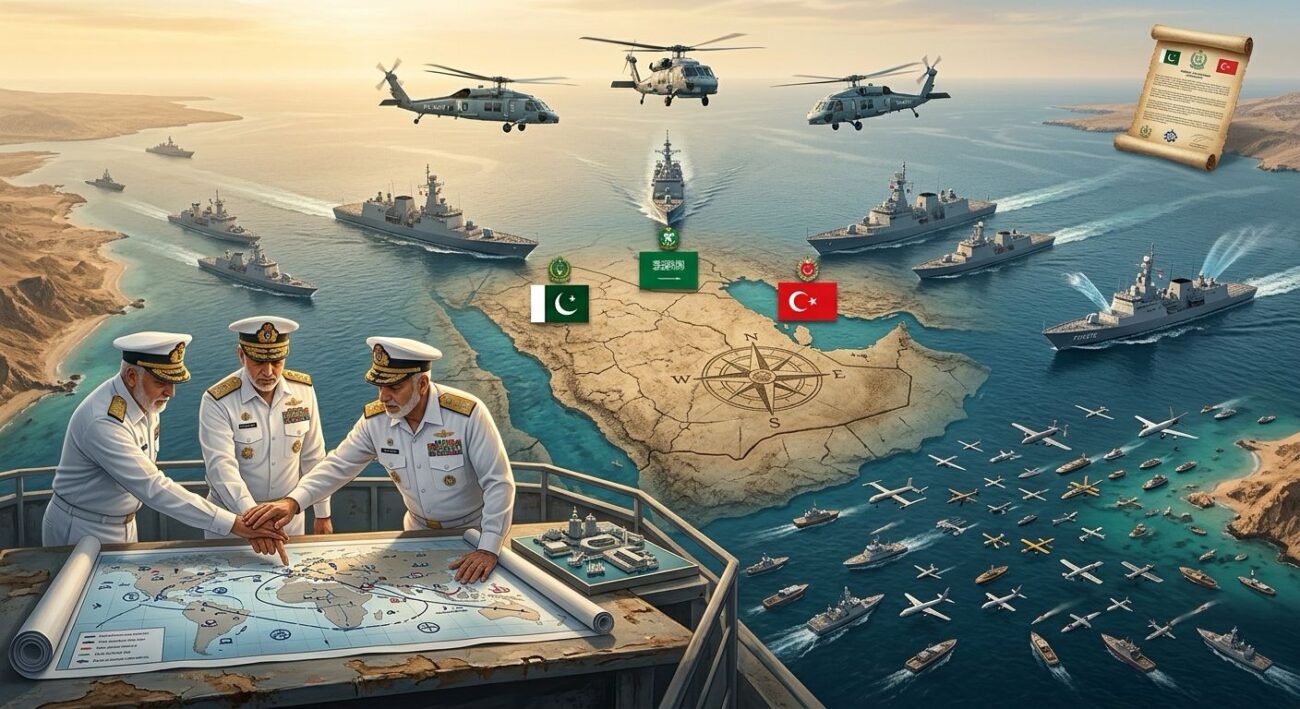
The third lesson concerns jointness, and the enlarged European list makes it more pointed, not less. By naming ground combat, maritime capabilities, and air and missile defence as separate priorities, the European Council has effectively published a reminder that a modern force must be balanced and integrated across all its domains at once. Europe’s difficulty is that it must attempt this across 27 states; Pakistan’s opportunity is to pursue the same integration within one state. Three services that procure and plan separately reproduce in miniature the same waste and the same seams that an adversary can exploit, and the European document is an argument, transposed, for genuine tri-service integration and for the pooling of effort with regional partners under frameworks such as the recent trilateral arrangement with Türkiye and Saudi Arabia. The fourth lesson is the most quietly affirming. The capabilities that Europe, after exhaustive study, judges most critical, air and missile defence, drones and counter-drones, electronic warfare, deep precision strike and space-based enablers, are almost exactly the ones that Pakistan’s own experience in May 2025 thrusts to the foreground. A European document arrived, by a wholly different route, at a list that a South Asian air campaign had already written in real time. That convergence is an independent, non-Western validation of the priorities Pakistan has identified, including its bets on the emerging domains of artificial intelligence, quantum, and space.

The White Paper for European Defence is, in the end, a mirror as much as a plan, and its value lies as much in what it inadvertently reveals as in what it deliberately proposes. In the growth of its list from seven areas to nine, in its heavy tilt toward conventional mass, in the telling quietness where air superiority ought to be, and above all in its belated scramble to rebuild the enablers it once outsourced, it discloses more about Europe’s strategic condition than any communique intends. For Europe, the coming test is whether candour and cash can be converted into coordinated capability before the structural habits of national preference squander both. For Pakistan, the document is something rarer than a competitor’s secret. It is a detailed, externally produced map of what a modern force believes it needs, accompanied by a cautionary tale about the price of depending on another power for the enablers that make a force whole. Europe is paying that price now, in the most expensive way possible, by trying to buy back its autonomy after mislaying it. A middle power that reads the lesson early and builds its enablers and its institutions accordingly need not pay it in full.

Picture of Muhammad Waqas Haider

Muhammad Waqas Haider