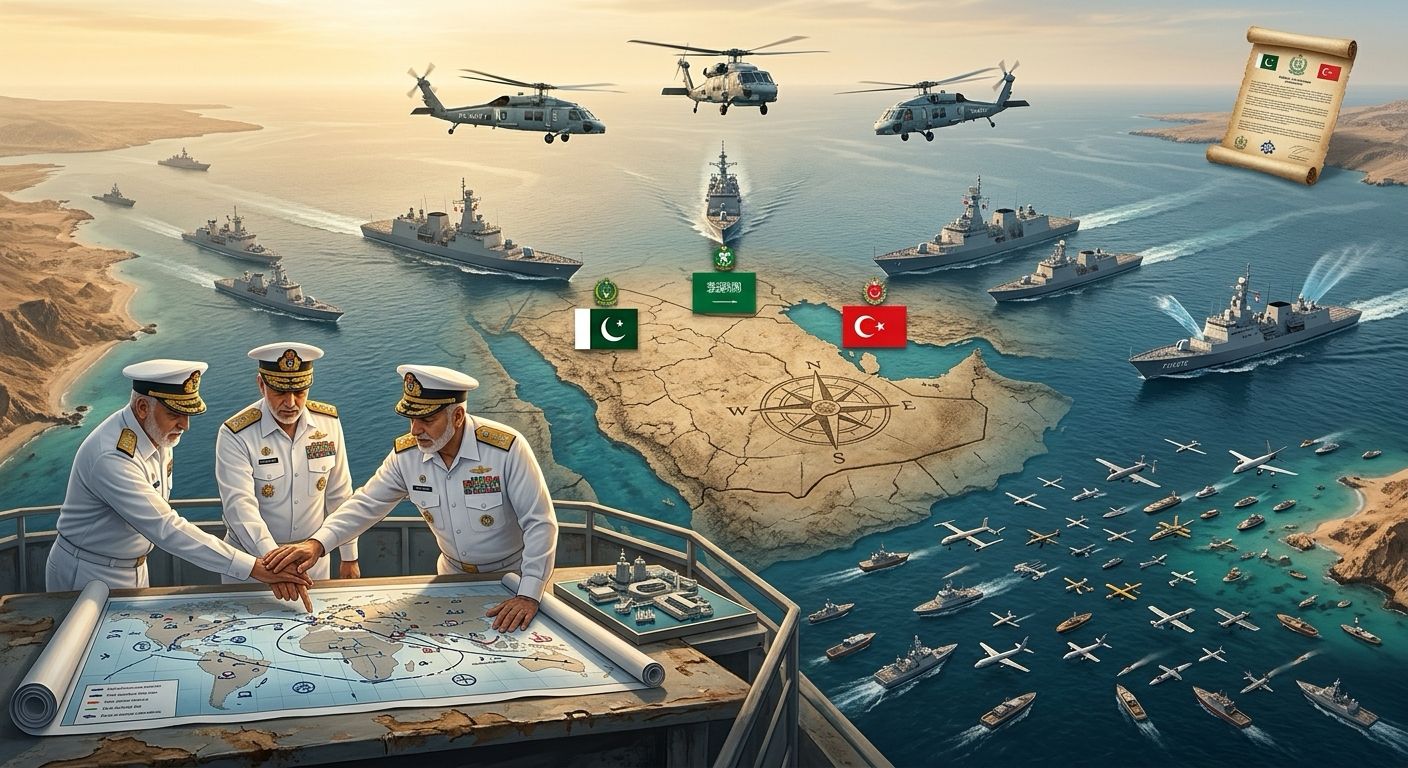
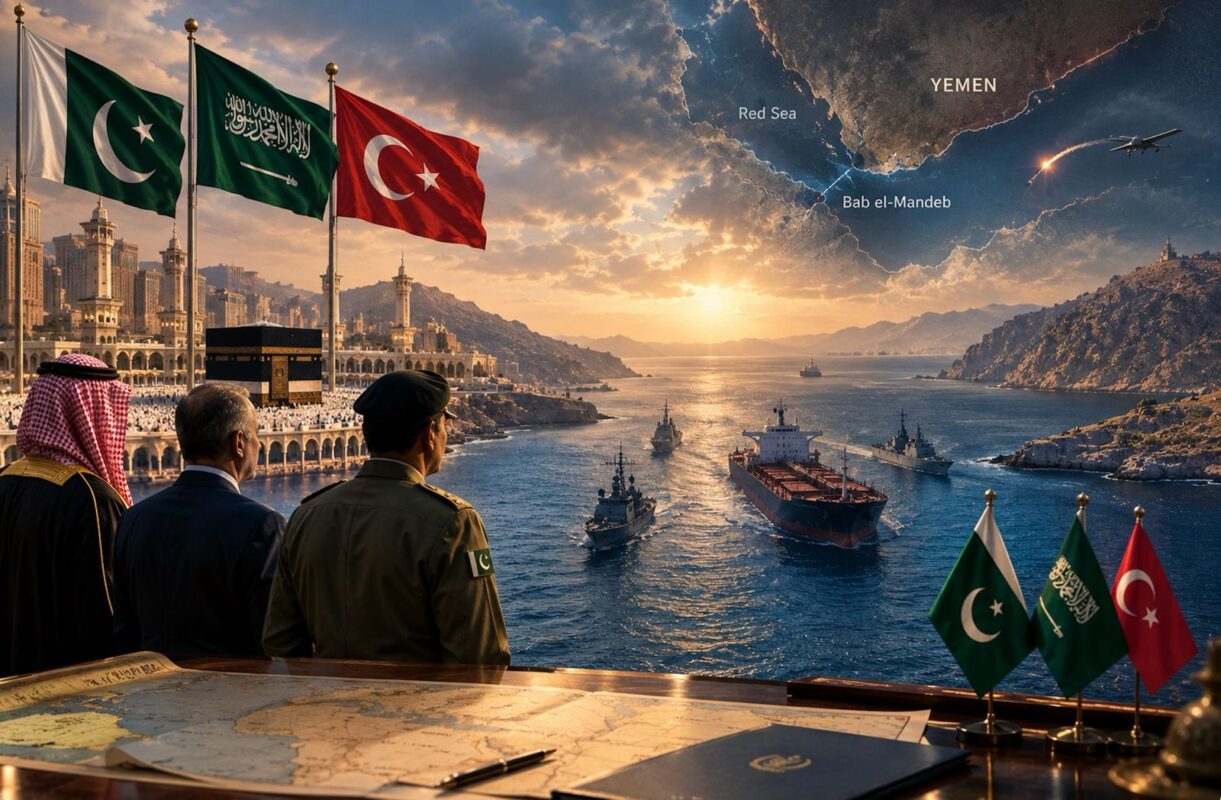
On the afternoon of 25 September, Pakistani Field Marshal sat down in Riyadh with Saudi Arabia's General Fayyadh bin Hamed Al-Ruwaili and Türkiye's General Selçuk Bayraktaroğlu, the first meeting of the three chiefs of staff since the Makkah Joint Defence Agreement (MJDA) was signed on 7 August. The participants pledged to "immediately translate" their commitments into "effective military cooperation", including enhanced intelligence sharing and "integration of capabilities".
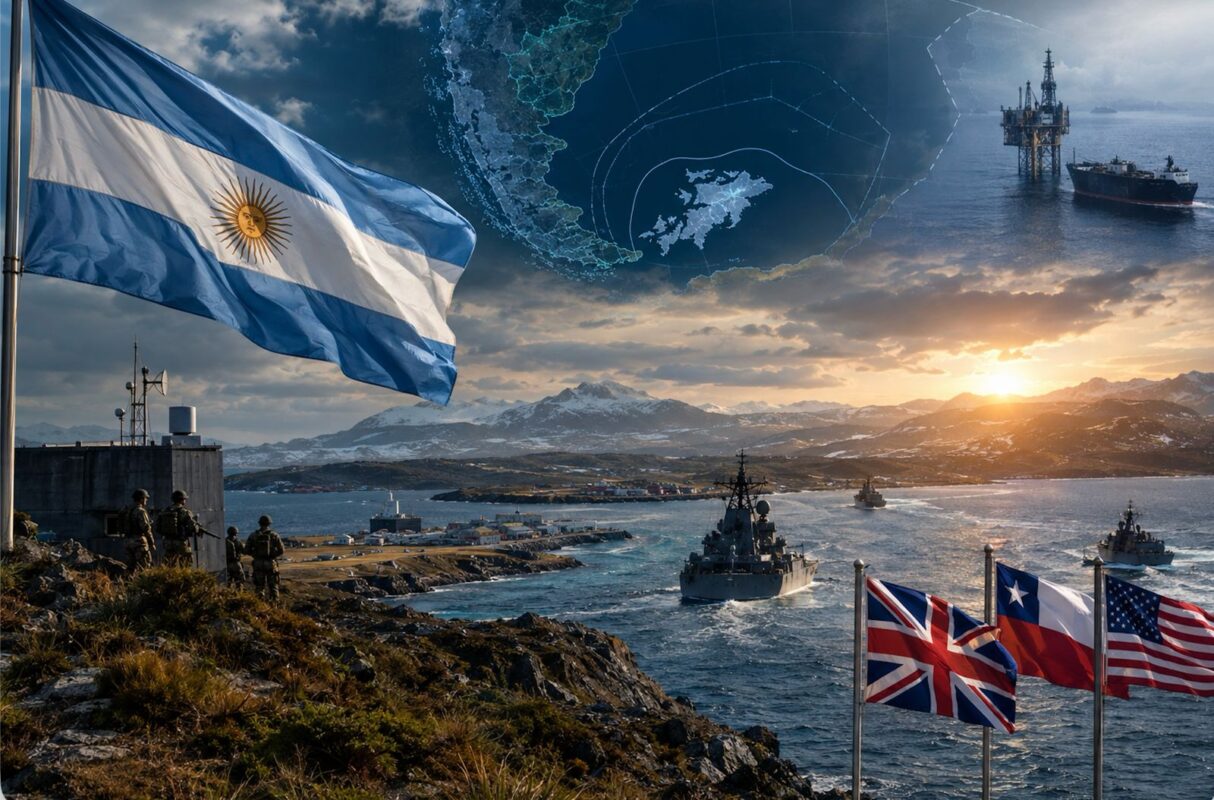
The signing of MJDA is politically significant, yet political declarations and operational military capability are two very different things. In the plainest sense, the MJDA's core tenet, an attack on one member treated as grounds for the other two to act, similar to NATO’s Article 5, being tested for the first time. NATO's Article 5, triggers an obligation for each member to come to the assistance of another member that is subjected to an armed attack. This assistance may or may not involve the use of armed force and can include any action that Allies deem necessary. This model every commentator today reaches for has been formally invoked only once in the alliance's history. Political solidarity and functioning combined military structure are not the same thing, a distinction that was precisely demonstrated by NATO in 1982 during the UK's military operations against Argentina over the possession of the Falklands Islands. NATO did not invoke Article 5 for Britain, because the South Atlantic fell outside the treaty area.
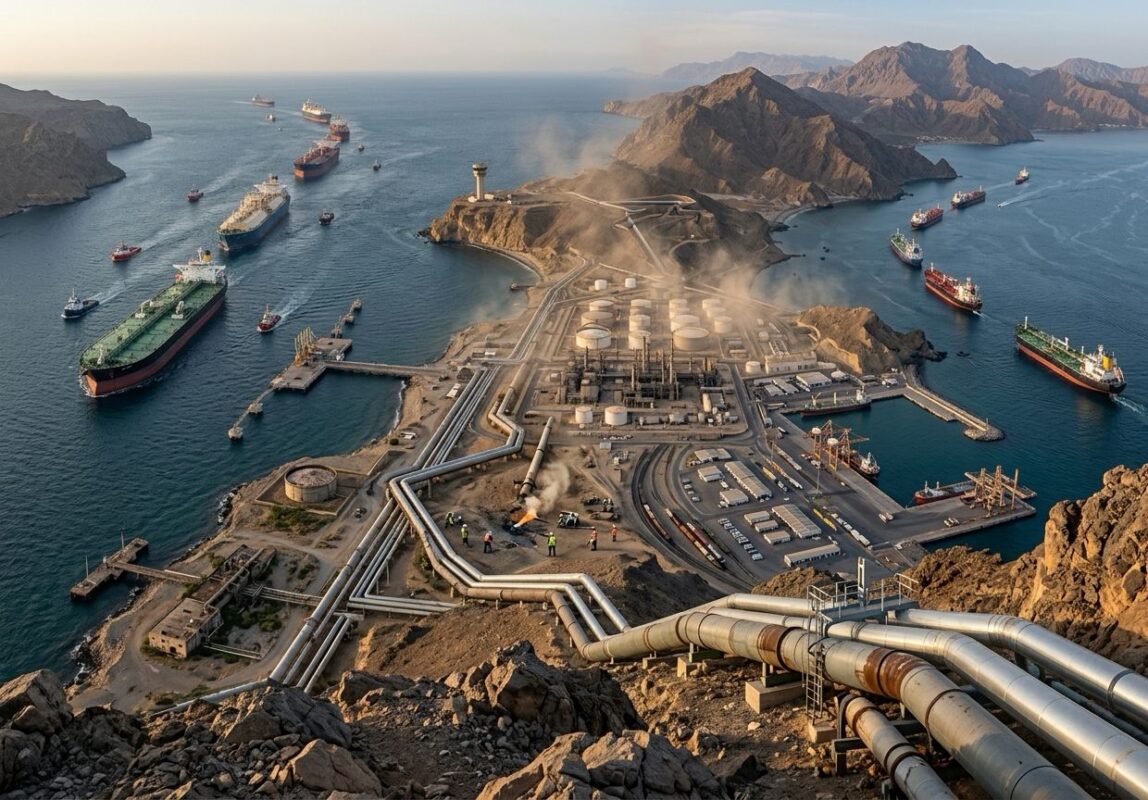
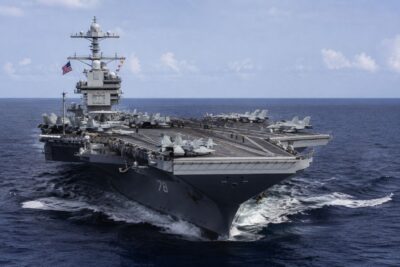
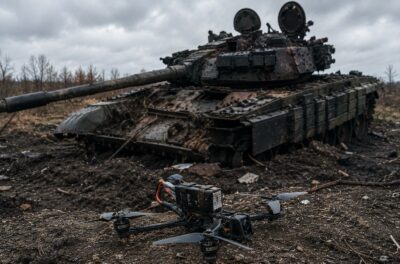
The waters connecting the Arabian Sea, Strait of Hormuz, Gulf of Aden and the Red Sea sit astride some of the world's most consequential sea lanes. Disruption at Hormuz or Bab-el-Mandeb does not stay regional; it travels immediately through shipping, insurance, energy prices and global supply chains. Recent experience has also shown that maritime threats no longer require sophisticated navies to be effective. Cheap aerial, surface and subsurface drones do not fit traditional identification-friend-or-foe categories, appear in large numbers, and are difficult to attribute with confidence before they strike. The cost asymmetry has reshaped naval thinking, a warship weighing whether to expend a costly interceptor against a drone worth a fraction of that price. A force may possess technologically superior platforms and still find itself strategically challenged by an adversary capable of imposing disproportionate economic and operational costs. The maritime domain, therefore, may ultimately become the most important test of whether the MJDA develops into an effective defence arrangement. This is why operationalising the plumbing for maritime component of the MJDA requires considerably more than assigning ships to a coalition.
The foremost requirement is shared Maritime Domain Awareness (MDA), not just sharing of information, but converting sensor data from different national systems into a single recognised picture every commander trusts. At sea, the problem is rarely a shortage of information; it is converting information from different sensors, platforms and national authorities into a RAMP (Recognized Air and Maritime Picture) that commanders can trust. Merchant vessels, fishing craft, naval units, aircraft, unmanned systems and potentially hostile contacts coexist within enormous spaces. Identification becomes difficult, particularly during crises when reaction times contract. A combined force, therefore, requires not merely a clearer operating picture but a Common Recognized Operating Picture, distinguishing what is friendly, neutral, hostile and unidentified. An unidentified contact is not an academic problem for a warfare officer; it is an operational uncertainty capable of producing hesitation, miscalculation or even fratricide.
MDA cannot be genuinely shared unless information can move across national systems. That means addressing secure data links, encryption standards, classification protocols and information-release policies. States understandably guard intelligence sources, encryption architecture and sensitive surveillance capabilities. The solution, therefore, cannot simply be for one partner to open its networks to another. MJDA members would need agreed gateways through which releasable operational information can be exchanged without compromising sovereign systems.
Combined maritime operations demand a common understanding of doctrine. Different navies may interpret surveillance, interception, air defence, anti-submarine warfare, aviation operations and maritime interdiction differently. Those distinctions matter little during ceremonial exercises but become decisive when commanders are required to take action under pressure. Doctrines must consequently translate into compatible Rules of Engagement (ROEs). Who can classify a contact as hostile? Who authorizes interception? Under what conditions can force be used? What happens when a vessel approaches one country's unit but remains outside another's engagement criteria? Unless these questions are answered beforehand, political solidarity can rapidly dissolve into tactical hesitation.
Communication presents an equally practical challenge. Pakistan, Saudi Arabia and Türkiye possess different military cultures, languages and communications practices. Tactical communications require brevity and precision. Existing naval exercises provide an important foundation and have created substantial familiarity among participating navies, however, a mundane but real problem is that Pakistani, Saudi and Turkish forces default to different working languages on tactical circuits, which is why multinational exercises script communication tightly. But scripted exercises can produce an illusion of interoperability. War provides no such script, and the reality would be increasingly complex, marred by unscripted events, ambiguous contacts, degraded communications, cyber disruption, multiple and simultaneous manned-unmanned threats and politically constrained ROEs.
Then comes perhaps the least glamorous but most difficult question of force flow. Who provides what? A maritime operation may require warships, helicopters, maritime patrol aircraft, unmanned systems, intelligence support, logistics ships and shore-based surveillance. Every government will inevitably calculate costs, commitments, national willingness to expose particular assets to risk and the acceptability of casualties. The maritime dimension of MJDA would require an agreed force-generation mechanism defining anticipated contributions, command relationships, readiness levels and procedures for reinforcement. Without such arrangements, political leaders may declare that a combined response is required only for commanders to discover that the necessary ships, aircraft or surveillance assets have not been assigned.
Finally, the MJDA should not attempt to replace every existing maritime mechanism. The region already contains bilateral and multinational arrangements. The more realistic approach is institutional complementarity: determine what the MJDA uniquely contributes and develop mechanisms allowing it to interface with other structures when interests overlap. The emergence of parallel maritime arrangements such as Multinational Maritime Coalitions itself suggests that middle powers increasingly prefer flexible, overlapping security instruments rather than relying exclusively upon a single alliance mechanism.
Operationalising the maritime dimension of MJDA will require much more than the political will demonstrated. Pegged to effective interoperability, commonality of doctrines and a predictable force flow, the military effectiveness of such alliances is built precisely through such unglamorous work. Ultimately, the credibility of the MJDA at sea will not be measured by the language of the agreement or the number of participating countries. Instead, it will be measured in terms of operational effectiveness and achievement of desired end states.