
Publications

Iraq After Operation Inherent Resolve: Testing Security and State Control

Picture of Binar Faeq Karim

Binar Faeq Karim

Analysis Series

Analysis/0097/October/2026/London-Dialogue. 08 October 2026

By Binar Faeq Karim

Abstract:

The end of Operation Inherent Resolve places Iraq’s security apparatus under two distinct tests. First, can Iraqi forces sustain pressure on ISIS remnants? They appear better prepared for this task than they were at the time of the US withdrawal in 2011. Second, can the government bring weapons and military decisions under state control, in line with Prime Minister Ali al-Zaidi’s stated principle that there should be “no weapons outside the framework of the law, and no force outside the institutions of the State”? The second test appears harder under present political and regional conditions.

Introduction

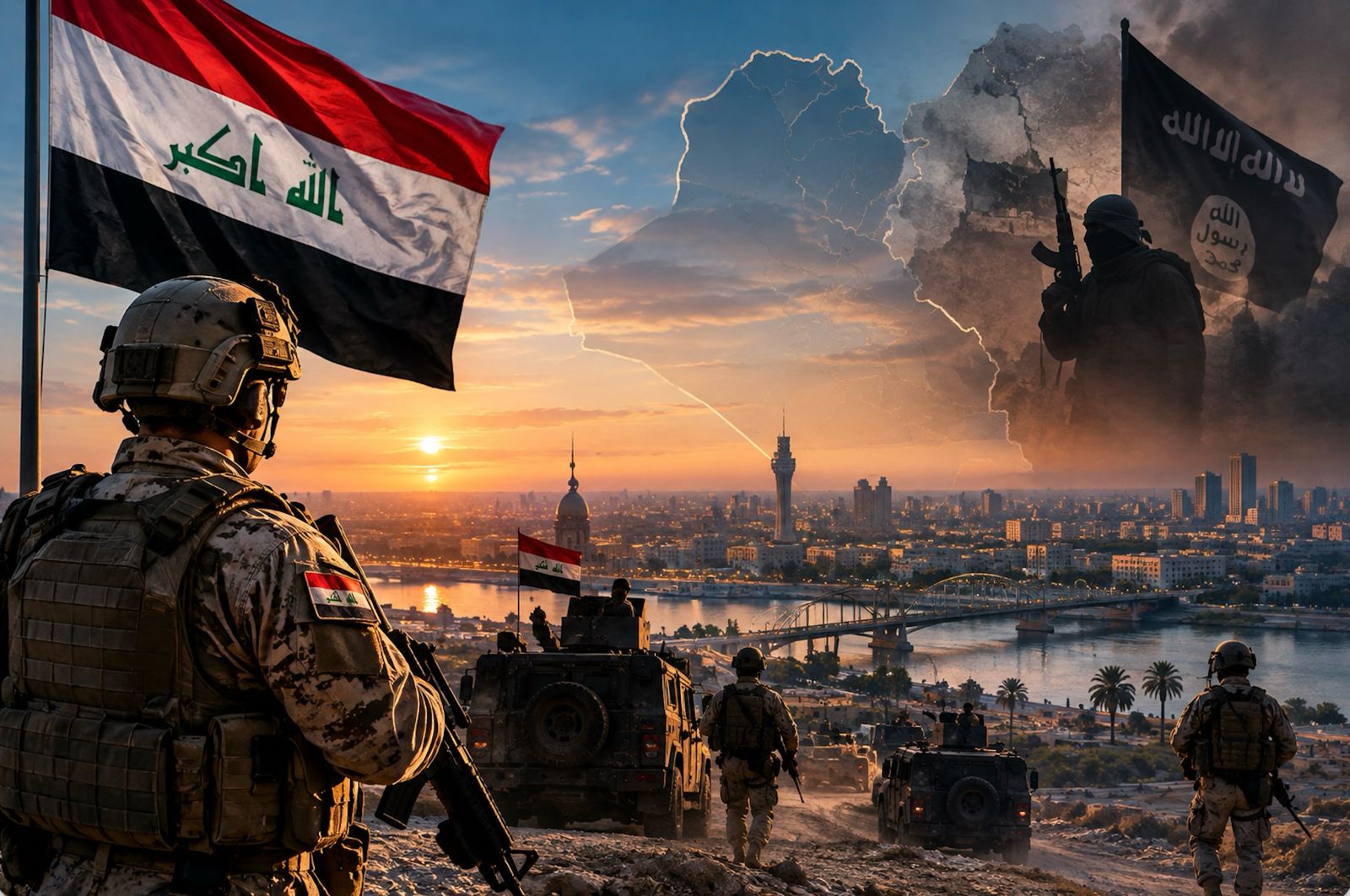
On 30 September 2026, US and coalition forces completed their departure from Iraq, ending the military mission launched in 2014 against the Islamic State in Iraq and Syria (ISIS). At the closing ceremony, Prime Minister Ali al-Zaidi stressed that the coalition’s departure “does not mean the end of our battle against terrorism”; instead, it marks Iraq’s transition to “full responsibility for its own security and stability”. He also linked this responsibility to the government’s authority over armed force, declaring: “There shall be no weapons outside the framework of the law, and no force outside the institutions of the State.”

The withdrawal comes amid continuing regional tensions. The US-Iran conflict has entered its eighth month without a settlement and has affected security across the region. Negotiations continue, although Washington and Tehran remain divided over the terms of ending the fighting. Meanwhile, hostilities between Yemen’s Houthis and Saudi Arabia have included missile and drone attacks. On 3 October, the Houthis claimed responsibility for an attack on an Aramco facility in Riyadh, which Saudi authorities had not immediately confirmed. Iraq is therefore assuming greater responsibility for its security while regional conflicts remain unresolved.

This is the central test created by the end of Operation Inherent Resolve. Can Iraq’s security and military institutions keep ISIS suppressed without a coalition combat presence? Can the government use the same moment to place weapons and decisions of war and peace under a single state authority? Current indications suggest that Iraq may be better equipped to meet the first challenge than it was in 2011, although regional instability remains a complicating factor. The second appears more difficult under present political and regional conditions.

Sustaining Pressure on ISIS

Iraq begins this phase from a stronger position than it held when US forces withdrew in 2011. A July 2026 United Nations assessment described ISIS in Iraq as being at its weakest, with its strength reduced to the low hundreds. Its remaining cells were concentrated mainly in desert areas and were capable of only limited operations. Iraqi forces now have more experience, stronger intelligence capabilities and a more capable Counter Terrorism Service. In October 2025, the coalition certified that Iraqi forces could manage the full airstrike process independently.

A recent US oversight assessment found that ISIS in Iraq was severely degraded and focused largely on survival, while its attacks across Iraq and Syria had fallen to their lowest level since 2013. This makes an immediate return to territorial control unlikely. The greater risk is a gradual recovery of sleeper cells in rural and disputed areas, particularly if coordination weakens between federal forces, the Peshmerga and intelligence agencies. The coalition’s departure also places greater responsibility on Iraqi institutions to sustain operational pressure while regional conflict increasingly competes for their attention and resources.

The withdrawal is not a complete end to security cooperation. Washington says it will continue targeted training and intelligence support through a bilateral relationship. That support can help close specific capability gaps, but it will no longer substitute for Iraqi command, planning and coordination. The daily responsibility for detecting cells and responding quickly now belongs to Iraqi institutions.

Iraq can probably keep ISIS below the level of a territorial threat if its institutions maintain operational pressure and Baghdad and Erbil cooperate in the disputed territories. The withdrawal itself does not create a security vacuum. A breakdown in coordination, however, would give ISIS the space it needs to recover. The first test is therefore less about the number of foreign troops and more about whether Iraqi institutions can preserve the cooperation and readiness built during the coalition mission.

Bringing Weapons Under State Control

The second test concerns armed Iraqi factions that continue to maintain weapons and military decision-making outside state authority. Article 9 of the Iraqi Constitution prohibits armed formations outside the state’s security institutions. As reported, Prime Minister Ali al-Zaidi called on these factions to hand their weapons over to the state and pledged to disarm them by 30 September. The government’s plan required the factions to surrender their weapons, dissolve their independent organisations and integrate into the official security forces. The real test, however, is whether Baghdad can establish effective command over these forces and prevent military action that it has not authorised.

Washington supports bringing these factions under state control, but its position is primarily shaped by regional security concerns. US officials have made clear that the withdrawal does not end Washington’s concern about the factions’ ability to attack American interests and regional partners. Washington has previously imposed sanctions on Iraqi armed groups and conducted retaliatory strikes against their positions, with further sanctions remaining possible. This creates a political complication for Baghdad: US pressure may strengthen the government’s leverage, but it also allows the factions to portray the effort to centralise weapons as an American demand rather than an Iraqi constitutional requirement.

The coalition’s departure gives the government a stronger political argument. For years, resistance factions said that they needed weapons because American troops remained in Iraq. That justification is now weaker. Al-Zaidi originally linked the 30 September withdrawal to a deadline for disarming non-state groups, but the government has moved that deadline to June 2027.

How the Factions May Adapt

The factions’ initial statements did not indicate collective demobilisation. Kataib Hezbollah declared that “the resistance has won this round” and denied reaching a disarmament agreement with the government. Its leader, Ahmad al-Hamidawi, instructed fighters to suspend military operations but retained an exception for targeting aircraft the group considers hostile. The Islamic Resistance in Iraq separately stated that it was “not bound by any timeline or agreement” announced by the government and insisted that its weapons would remain in the hands of its fighters.

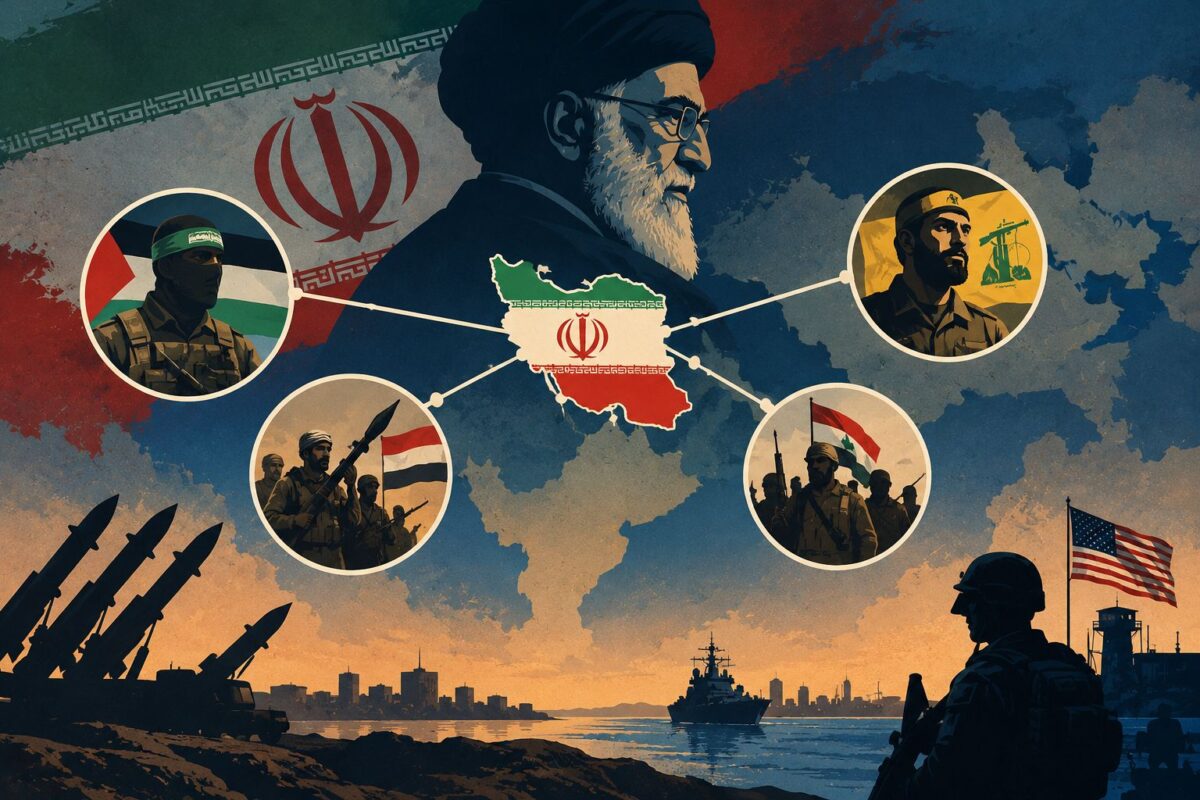
These statements suggest that the factions may adapt their justification for retaining weapons rather than abandon them. Al-Hamidawi’s exception allows Kataib Hezbollah to shift from resisting US troops to claiming an independent role in defending Iraqi airspace. The Iraqi Islamic Resistance also linked negotiations over its weapons to the departure of US and NATO forces and the removal of all foreign military presence, broadening its definition of sovereignty beyond the end of Operation Inherent Resolve. This regional role is already established: the factions have claimed missile and drone attacks against Israel and US targets, while regional assessments have identified operational coordination between Iraqi groups and Yemen’s Houthis.

The factions’ reluctance to disarm is also connected to their domestic position. They have developed business networks and political representation in parliament and government, making weapons a source of political protection and bargaining power as well as military capability. The government has already responded to this pressure by recasting the original disarmament deadline as the beginning of a longer regulatory process, partly to avoid a direct confrontation. A gradual process may therefore be necessary, but it must still produce verifiable state custody of strategic weapons and a single chain of command.

Conclusion

The end of Operation Inherent Resolve puts Iraq to two tests: whether its security institutions can maintain the suppression of ISIS and whether the government can bring weapons under state control in line with Prime Minister al-Zaidi’s stated commitment. Iraq appears better prepared for the first, given ISIS’s reduced strength and the capabilities developed by Iraqi forces. Continued suppression will nevertheless depend on coordination between federal and Kurdish forces and their ability to sustain operations amid regional instability.

The second test is more politically difficult. The departure of US forces weakens the resistance factions’ longstanding justification for retaining weapons, but their initial responses suggest that it may not be enough to secure disarmament. Their political interests and regional relationships remain, while the unresolved US-Iran conflict gives them grounds to redefine their military role. Iraq may therefore make progress against ISIS while facing a longer negotiation over weapons. Whether this process advances to a new phase will depend on domestic political dynamics and developments across the region in the months ahead.

Picture of Binar Faeq Karim

Binar Faeq Karim