Publications
Emerging Multipolar Asia: Regional Contestation Shapes the Future
Dr Tauseef Javed
Analysis Series
Analysis/0082/September/2026/London-Dialogue. 16 September 2026
Author: Dr Tauseef Javed
Introduction
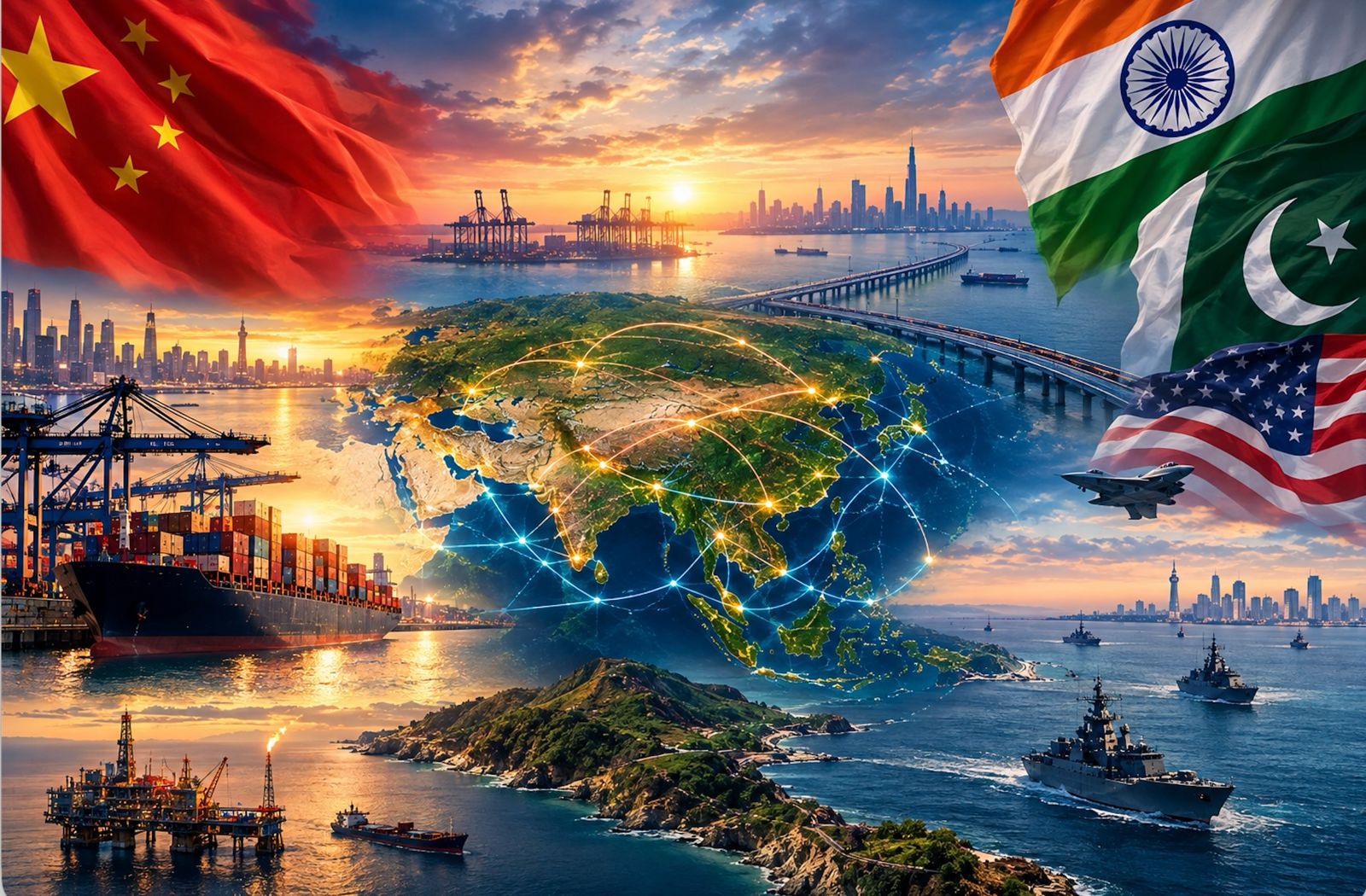
We are living in an Asian century, though it is debatable; the rise of Asian economies in recent years suggests that Asia is leading in economic progress. Moreover, currently Asia is entering a period of profound geopolitical transformation. The relative distribution of economic, military, and technological power is changing, while the strategic rivalry between China and the United States increasingly shapes the wider Indo-Pacific and broader region. At the same time, India’s growing economic and strategic weight is giving it greater influence over the emerging regional order, while Pakistan is attempting to preserve strategic space between competing major powers. However, the Iran-US war of 2026 has also exposed that the United States, as a superpower, is dragged into and stranded in the conflict that may dent its global standing forever. But this war has also shifted the strategic thinking of regional powers in the Middle East, creating space for a country like Pakistan to project its potential as an emerging middle power. These developments are occurring alongside expanding economic interdependence, connectivity projects, institutional cooperation and new forms of minilateralism.
Therefore, the resulting regional environment cannot be adequately described as a simple return to Cold War-style bloc politics. Instead, Asia is characterised by simultaneous competition and cooperation among great powers like the United States and China, balancing and hedging among regional powers like Pakistan and India. The United States is strengthening strategic partnerships with India and other Indo-Pacific states to preserve a favourable balance of power and respond to China’s rise. China, meanwhile, is expanding its economic, technological, and strategic presence through the Belt and Road Initiative (BRI), the Shanghai Cooperation Organisation (SCO), regional trade and investment, and an expanding network of partnerships. India seeks to enhance its position as a major power while retaining considerable strategic autonomy, a move that draws scrutiny. Pakistan, deeply connected to China but historically linked to the United States, is attempting to avoid becoming permanently locked into a single geopolitical camp. However, against the backdrop of war between Pakistan and India in May 2025 and Pakistan’s militarily enhanced portfolio, a new chapter has begun in which South Asia has changed, and Pakistan has taken back considerable space and relevance in the geopolitical order. Pakistan is becoming more relevant to the United States and broader regional countries in Asia, especially Middle Eastern and Central Asian countries. This has raised concerns in New Delhi because India sees a diplomatically active, economically stable, and militarily strong Pakistan as a threat to its rise and to its ability to secure influence in the region and globally.
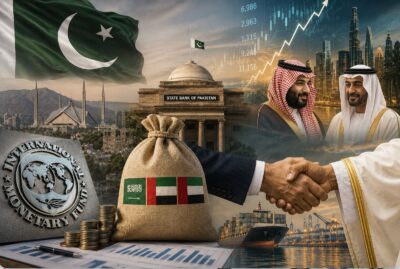
The central argument of this analysis is that the emerging Asian order is likely to be multipolar but highly contested. China and the United States will remain the principal drivers of strategic competition, but India will increasingly try to act as an independent pole of power rather than simply as an American strategic partner. Pakistan, with substantially strong military and defence material capabilities to increase its sphere of influence recently and a comparatively weak economy, though it is trying to get it fixed through allies’ help, can exercise agency through strategic balancing, connectivity, regional diplomacy, and relationships with multiple major powers. The future of the Asian order will therefore depend not only on great-power rivalry but also on regional states’ ability to preserve strategic autonomy and build cooperation mechanisms. However, in the case of India and Pakistan, their individual strategies toward respective powers may or may not succeed in maintaining strategic autonomy or balance, but when regional powers must interact because geography has brought them together, multipolarity will face a regional crisis. Both India and Pakistan are intertwined in a series of conflicts, from the Kashmir issue to water issues and terrorism. Both countries have their own views on conflict resolution. Therefore, future order in Asia will be more complex and conflict-ridden as regional major and middle powers interact.
From US Primacy to a More Complex Asian Order
For much of the post-Cold War period, the United States enjoyed predominant strategic influence in Asia. Its alliances with Japan, South Korea, and Australia, its military presence, and its economic and diplomatic influence formed the foundation of the regional order. China’s rapid economic growth, however, gradually altered this distribution of power. China’s rise has generated a dual process. On one hand, Beijing has become increasingly integrated into Asian and global economic structures. On the other, its growing military, technological, and diplomatic capabilities have produced strategic concerns in Washington and several regional capitals. The resulting US-China competition extends beyond military affairs. It encompasses advanced technologies, semiconductor supply chains, artificial intelligence, critical minerals, infrastructure, maritime security, trade and international institutions. Consequently, the competition is simultaneously geopolitical, geo-economic and technological.
South Asia has become particularly important within this transformation. The Council on Foreign Relations has described the region as an important arena for both US-China and China-India competition, noting that China’s expanding influence intersects with India’s rise and Washington’s efforts to adjust its Asian strategy. Pakistan’s emergence as a potential middle power even complicates it more because of the issues between India and Pakistan. This development complicates traditional understandings of regional order. The principal question is no longer simply whether China will replace the United States. Instead, the more important question is whether Asia will develop a pluralistic balance among several major and middle powers. Apparently, it seems difficult at this point in time.
China and the Challenge to the Existing Order
China’s strategy represents one of the most significant drivers of Asian geopolitical change. Beijing has expanded its regional influence through trade, infrastructure, investment, technology, diplomatic engagement, and security cooperation. The BRI matters because it links economic and strategic objectives. Infrastructure projects linking China with South Asia, Central Asia, Southeast Asia, the Middle East, and Europe can generate commercial opportunities while simultaneously increasing China’s geopolitical presence.
Pakistan occupies an important position in this strategy because of the China-Pakistan Economic Corridor (CPEC). Pakistan’s geographic location provides potential connections between China, the Arabian Sea, Central Asia, and South Asia. The relationship therefore extends beyond bilateral economics and has implications for the wider Eurasian order. China’s regional strategy, however, is not based exclusively on competition with the United States. Beijing simultaneously participates in institutions in which the United States has limited or no role, including the SCO and BRICS, while maintaining extensive economic relations with US allies and partners.
This illustrates the central paradox of contemporary Asian politics: China can compete with the United States strategically while remaining economically interdependent with the wider international system. Recent China-Pakistan official statements explicitly emphasise the construction of an “equal and orderly multipolar world” and an inclusive global economic order. This language shows how multipolarity has become a key component of Beijing and Islamabad’s diplomatic discourse.
The United States and the Indo-Pacific Balance
Washington’s response to China’s rise has increasingly focused on the Indo-Pacific. Rather than abandoning the existing regional order, the United States has sought to reinforce it through alliances, partnerships and new strategic arrangements. India is central to this strategy. The development of the Quad involving the United States, India, Japan and Australia demonstrates the increasing institutionalisation of cooperation among states concerned with maintaining a favourable regional balance. Defence cooperation, maritime-domain awareness, technology partnerships and supply-chain diversification have also expanded.
Yet interpreting India simply as an American ally would be misleading. India continues to pursue strategic autonomy. It maintains defence and economic relationships with Russia, participates in BRICS and the SCO, and seeks partnerships with the United States, Europe, Japan, Australia and other powers simultaneously. Its objective is less to become part of an American alliance system than to maximise India’s own strategic room for manoeuvre. This distinction is crucial for understanding multipolar Asia. India’s relationship with Washington is therefore best understood as strategic convergence without complete strategic alignment.
US-Iran War 2026
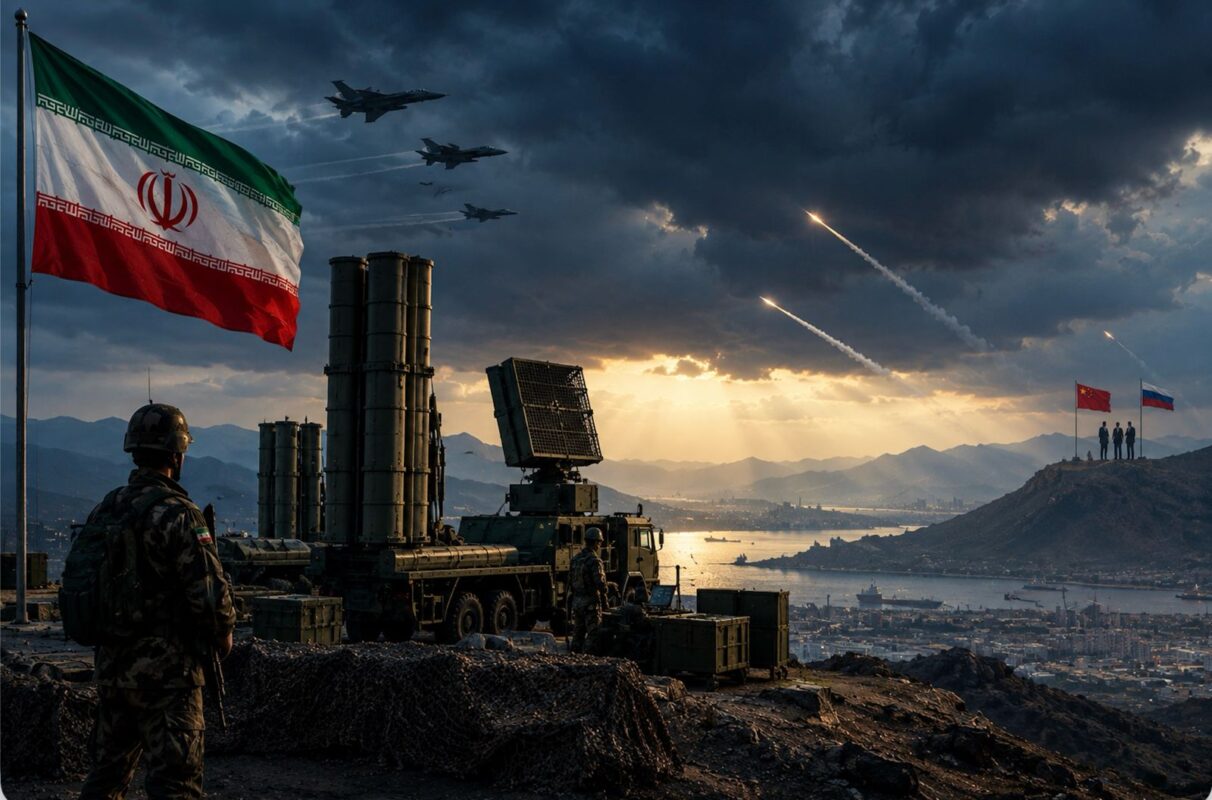
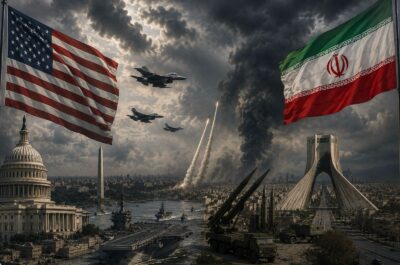
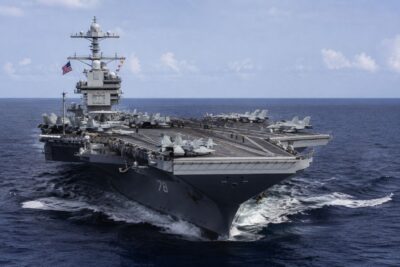
The US-Iran war of 2026 has also accelerated the shift in the international order. The US, as an economic and military power, faces a situation where it seems to be sinking to a level where regional dynamics are rapidly and continuously transforming. Security and the economy are so interlinked that the closure of the Strait of Hormuz has disrupted global supply chains so severely that inflation has risen worldwide, and this war is one factor. This conflict has exposed the region to porous security, leaving regional economies stranded between risks and challenges. At the same time, it has left ground for diplomacy to end the war, and the role of Pakistan in this regard was a case study of how it has gained momentum to establish itself as a trustworthy mediator, but at the same time, how the trust deficit between stakeholders (USA and Iran) ruined the mediator’s effort. The scenario shows that declining superpowers sometimes take on strategic risks, and miscalculations can drag them into a deeper ditch; for the USA, that ditch is the Strait of Hormuz. During this brief moment when a bigger power is struck down by a strategic mistake, regional or smaller powers emerge, and Pakistan is a case in point, where it felt compelled to become the diplomatic capital between the belligerents. However, the current situation holds volcanic dynamism, where the situation can go in any direction, but the Middle East has changed now, and it has gone into a strategic overhaul where a Joint Defence Pact termed the Macca Joint Defense Agreement between Pakistan, Saudi Arabia, and Türkiye, furthering defense cooperation between Kuwait and Pakistan, and talks on defence cooperation between Bahrain and Pakistan are in this background. Pakistan is rapidly becoming a potential middle power in the region. China fully supports Pakistan’s role in the region, and Chinese support cannot be underestimated because China and Iran are interconnected through economic ventures, and Tehran is a key pillar of China’s economic connectivity strategy. Therefore, a war between Washington and Tehran can be seen as one front in the strategic competition between the USA and China. However, the emergent role in the backdrop of war taken by Pakistan is interesting because South Asia is home to India as well, which is in all respects in competition with China and has a long-standing conflict over Kashmir with Pakistan. All three are geographically interconnected. Therefore, Islamabad’s standing as a diplomatic capital for the world’s conflicts cannot be acceptable in the long term to Delhi because India blames Pakistan for terrorism and portrays itself as a victim of it. In this scenario, India will likely try to balance its economic cooperation with China and its participation in multilateral forums like BRICS, but it will keep diplomatic channels with Islamabad closed. As an emerging economic power, India does not want to be bracketed with Pakistan. For the past few years, Delhi seems to have believed Islamabad should not be its benchmark, but international relations are about realities, and the reality is that Pakistan and India are bound by geography, making diplomatic interaction natural to resolve their issues. Without resolving their issues, both countries cannot reach their full potential. Therefore, multipolarity would be contested, diplomatically slow, and prone to regional conflicts, as between India and Pakistan.
Conclusion
The emerging geopolitical order in Asia is shaped by multipolarity, but leading power China and the United States are prime drivers of this shift. China is challenging elements of the existing regional order through economic, technological, and strategic expansion, while the United States is attempting to preserve a favourable balance through alliances and partnerships. Regional powers like India are also asserting their influence. Pakistan, meanwhile, is attempting to preserve strategic flexibility by deepening its partnership with China while maintaining engagement with the United States and other regional powers. However, its mediating efforts amid recent US-Iran tensions have substantially increased its relevance in the potential middle-power category, but how Pakistan can maintain this status will also be a question in itself.
For Pakistan, the principal challenge is to convert strategic geography into sustainable economic and diplomatic influence. Rather than becoming permanently embedded within one geopolitical bloc, Islamabad’s interests may be better served by maintaining diversified partnerships and promoting connectivity, trade, and regional diplomacy. In addition, it can promote peace globally through its efforts on the US-Iran ceasefire deal. For India, the challenge is to transform its growing capabilities into broader regional leadership without becoming excessively dependent on any major power. For China and the United States, the central challenge is to prevent their strategic competition from destabilising the regional environment.
A primary stabiliser would be the resolution of conflicts between India and Pakistan. However, currently, the strategic communities on both sides are not seeking mutual consensus on their conflicts. This would substantially damage India’s aspiration to become a regional power by maintaining strategic autonomy and Pakistan’s effort to shine as a peace capital. Both countries are bound to interact to resolve bilateral issues. Conflict resolution between Pakistan and India at the regional level will effectively shape multipolarity.
Dr Tauseef Javed
Related posts
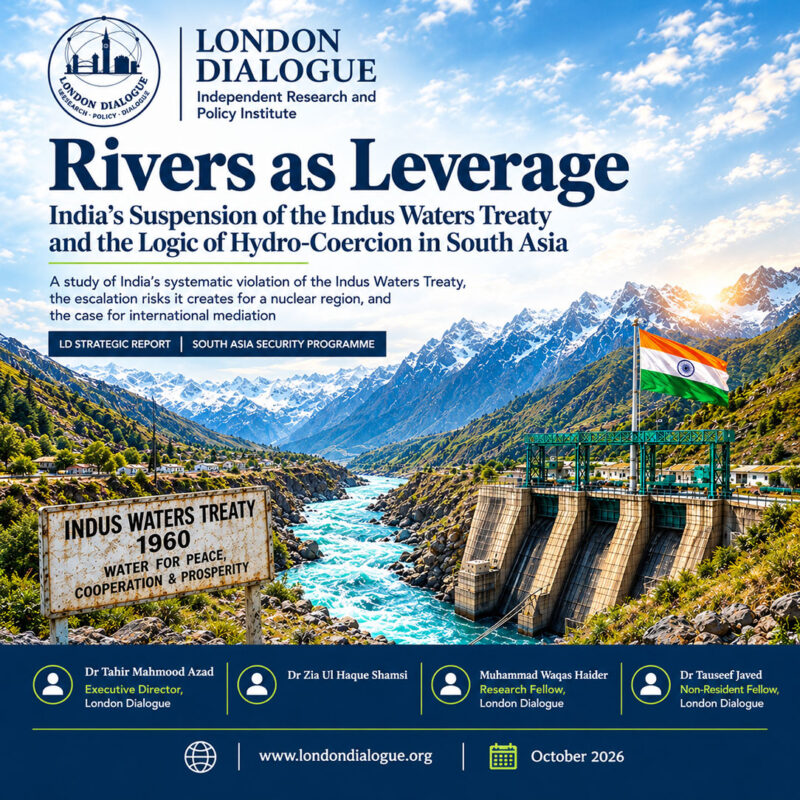
Rivers as Leverage: India’s Suspension of the Indus Waters Treaty and the Logic of Hydro-Coercion in South Asia
Iraq After Operation Inherent Resolve: Testing Security and State Control
The Electrostate Thesis: Geopolitics, Clean Energy Dominance, and China’s New Global Leverage
A Last Open Letter to President Mr D. J. Trump
Iran’s Reliance on “Self-Defence” in the Shadow of “Strategic Loneliness”
From Chokepoint Diversification to Coupling: Hormuz, Bab al-Mandab and the New Fragility of Gulf Energy Security
Imran Khan’s Solitary Confinement and the Mandela Rules
The South Atlantic Flashpoint: Argentina Tests Britain, Chile, and the US
Religious Rhetoric Around the Mecca Defence Agreement and Its Long-Term Impacts for Pakistan
Operationalising The Maritime Dimension Of The Makkah Joint Defence Agreement
The Arithmetic of Saturation: What the Iran War Taught About the Limits of Layered Air Defence
Beyond the Mecca Accord: Why Pakistan Must Choose Deterrence over Entanglement in Yemen
London Dialogue — Founding Statement
Publication Categories
- Analysis (102)
- Book Review (1)
- Commentary (6)
- Essay (9)
- Journal (0)
- Journal Article (0)
- Policy Brief (6)
- Policy Paper (1)
- Research Article (2)
- Research Report (5)
- Young Writers Corner (0)