
Publications

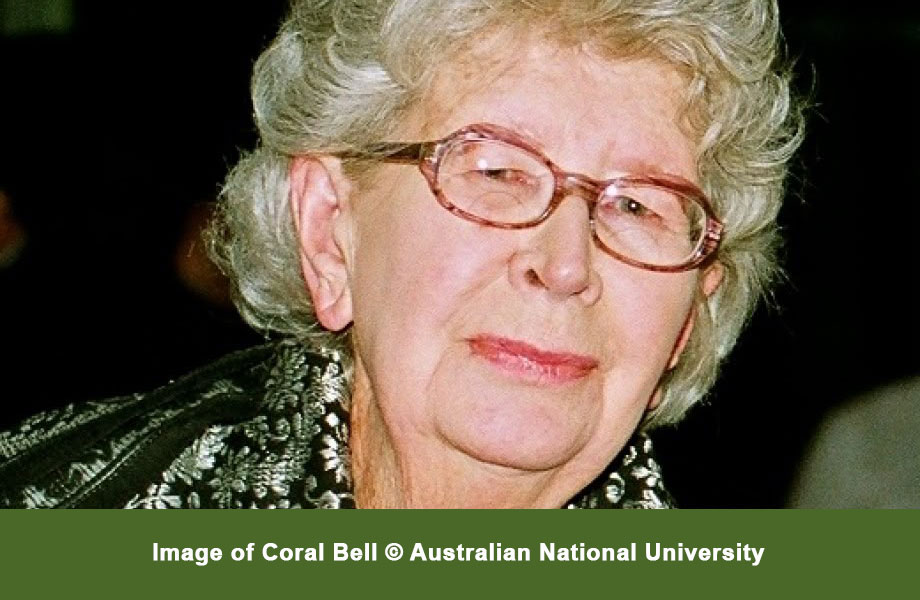
Coral Bell on 911: Nuclear Weapons Remain the Greater Danger

Picture of Benedict Moleta

Benedict Moleta

Essay Series

Essay /008/September/2026/London-Dialogue. 23 September 2026

Author: Benedict Moleta

Abstract

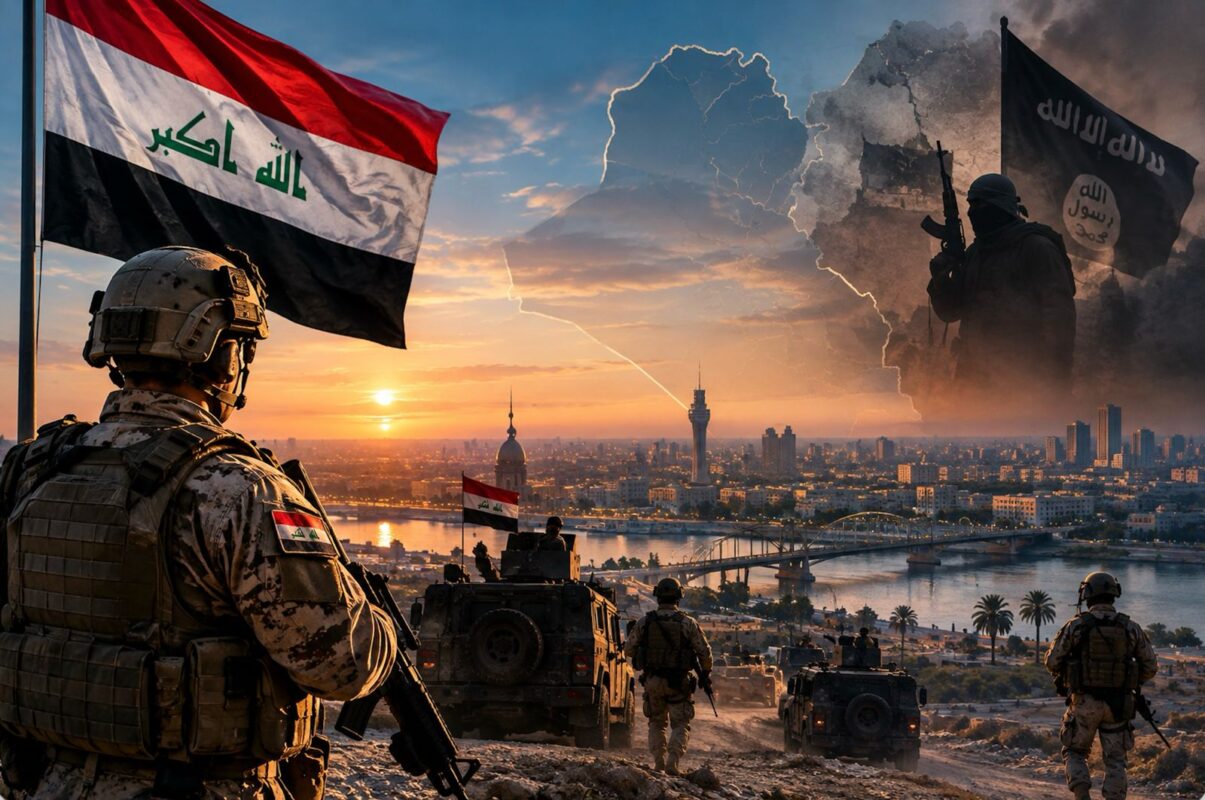
Australian scholar of world politics Coral Bell (1923–2012) wrote about nuclear weapons recurrently over the six decades of her career. When al-Qaeda attacked America on September 11, 2001, the historic significance of the events was not lost on her. Nevertheless, she maintained that whatever shocking efficacy non-state actors might come to hold in the 21st century, unmanaged nuclear weapons remained the greater danger.

Introduction

In the last decade of her life, Coral Bell wrote some of her best work. It included reflections on the long-term significance of al-Qaeda’s attacks on America. 25 years later, Bell’s late work still offers a distinctive frame for considering the lasting significance of those events.

Bell preferred illuminating arguments to overall assessments, theories, or policy prescriptions. One argument she considered enduringly valid was that, whatever shocking efficacy non-state actors might come to hold in the 21st century, unmanaged nuclear weapons remain the greater danger.

A Major Element in International Affairs

From the time Bell wrote her first book in 1955, nuclear weapons were central to her work. That sustained attention reflected, in her view, nuclear weapons’ centrality to international politics. Considering the advent of the hydrogen bomb in 1954, she wrote the following year that “it is arguable that the major development in international relations” the preceding year had been “the emergence of the new armaments as in themselves a major element in international affairs.”

From this point onwards, she argued, the “familiar pattern of diplomatic history” would be substantively shaped by the evolution of this historically new technology, in which having the capacity to make nuclear war became blended with crisis situations in newly dangerous ways.

In this view, Bell had much in common with the first writers on “the ultimate weapon” and the ambiguities of nuclear deterrence. She had less in common with those who suggested that thinking in gruesome detail about the consequences of a nuclear Armageddon could stiffen collective human resolve to make sure no such thing ever took place. The distinction matters, because it locates Bell within the more sober of the traditions that shaped Cold War strategy. One held that the bomb had worked a revolution in international politics: because a great-power nuclear war could not be won in any meaningful sense, the central task was to manage an uneasy and permanent condition of mutual vulnerability. The other, associated with analysts focussing on details of fighting and surviving a nuclear exchange, treated escalation as something that might be controlled and even mastered. Bell’s instinct was to distrust that confidence. But the optimist in her also guided a career-long exploration of practical prospects for managing crises, beyond the dichotomy of ally/adversary relations.

The Twilight of the Unipolar World

To understand the productive approach Bell took to the primacy of nuclear weapons in international affairs, her late work (from the end of the Cold War onwards) rewards revisiting. Bell’s last book, A World Out of Balance, was published in 2003. In it, she put forward a set of arguments about prospective dynamics in international politics, projecting into the 2030s and beyond. In her view, it was to be a period both shaped and darkened by what she called the long “twilight of the unipolar world”.

In this protracted phase, perhaps extending for much of the 21st century, Bell considered overarching statements about a global power shift away from America to be premature, whether toward China, toward a new-emerging alliance of counter-hegemons, or even toward the prospect of large and small powers working together in concert. Bell was not forecasting either the persistence of American primacy or its sudden replacement; she was describing an interval, long and dangerous precisely because of its indeterminacy, in which the military facts of American pre-eminence would coexist with a steady erosion of the authority and self-discipline required to exercise that pre-eminence. Two decades on, that framing has aged better than the unipolar triumphalism it was written against, but also remains a valuable contribution to debates about powershift from the Atlantic to the Pacific, or from Washington to Beijing. The distribution of power in 2026 remains contested and transitional, and, on Bell’s reading, correspondingly hazardous.

American Leadership in Question

She was confident, however, that the prospective dangers of the 21st century were inseparable from the hard truths of America’s faltering leadership – both domestically and in the Euro-Atlantic alliance. Published shortly after the Euro-Atlantic split over the 2003 invasion of Iraq, A World Out of Balance considered this latest American adventure as a consolidation of American erring. Earlier, in 1971, she had suggested that the folly of Vietnam would cast a very long shadow over America’s international credibility. For Bell, the Iraq rupture was not an isolated quarrel to be smoothed over but a symptom – not of simple decline, but of a complex period of prospective transformation. The question now, regardless of how quickly the latest crisis among Euro-Atlantic allies might be “patched up,” was whether American alliance leadership, fundamental to Western order since the Second World War, was fit for the 21st century.

In a later essay on the prospects of the Obama presidency, Bell implicitly asked the same question about American authority – this time in the UN Security Council. She saw the composition of the Security Council as “hopelessly anachronistic, still representing the power balance of 1945,” and of course the vested interests of all five permanent members were involved in this. But with respect to the most powerful country on the planet, and following President George W. Bush’s incapacity to lead an effective global response to the events of September 2001, Bell’s presidential question was: Would there be “enough decision-making steel within the velvet glove of Obama’s eloquence” to reorient American international leadership in the 21st century?

The Greater Danger: Unmanaged Nuclear Weapons

In contrast to the open question about American presidential authority, Bell saw ample and dangerous decision-making steel residing in unmanaged nuclear weapons. She did not devote herself to writing on arms control in the systematic manner of her colleague Hedley Bull. While his work has been the subject of scholarly attention for decades, Bell’s less-studied work offers a range of perspectives and a clarity of judgement that remain illuminating in matters pertaining to nuclear weapons – including in comparison to the dangers posed by Islamic militants. Three examples from Bell’s late work are as follows.

In the early 1990s, as the Soviet Union was dissolving (and al-Qaeda was in the process of incorporating a variety of militant groups), Bell emphasised the pressing need for Western allies to eschew end-of-history hubris, and to concentrate on the enduring matter of Russia’s nuclear weapons. Writing before the dissolution of the Soviet Union, and again in 1994, she focused firstly on “the present Russian security elite and the sequence of traumas it has recently experienced,” and secondly on the potential for “Russian nostalgia for a more glorious past” to “acquire a credible spokesman” who might in due course rattle the “25,000 nuclear warheads that Moscow still has at its disposal.” On the matter of prospective NATO expansion, Bell emphasised the danger of any Western policy by which the just-signed Strategic Arms Limitation Treaty (START) could “be vitiated.” From the vantage point of 2026, with an effective spokesman for Russian nostalgia having made Russia’s nuclear arsenal again central to European security, the warning’s prescience is difficult to miss. Bell’s point was not prophecy but priority: amid the euphoria of Western victory, the one variable that could still undo the modern world was being treated as a problem that had fallen off the agenda.

In 2007, shortly after President Putin had remonstrated against American globalism and NATO expansion at the Munich Security Conference, Bell put the comparative dangers of nuclear weapons and al-Qaeda in vivid contrast. “Nineteen men, armed only with box-cutters and airline tickets” had been able to inflict a historic injury on America. But, pointing to Vladimir Putin’s recent “muscle-flexing,” Bell left the reader to compare al-Qaeda’s singular efficacy with the plain fact that “the new Russia still retains, from its old Soviet days, a nuclear arsenal which is capable of a devastating strike on US.” The juxtaposition was the whole argument. Nineteen men could produce a spectacular and historic wound; only a state with thousands of warheads could produce an unrecoverable catastrophe. Efficacy and magnitude were not the same measure. Bell insisted on the greater enduring danger of the second – and therefore its singular policy importance.

Finally, in a 2008 interview, Bell compared jihadist efficacy with American primacy in a different way, as usual thinking about the long term. It was already clear to her that “America has not been able to make its will really effective in Afghanistan. And neither has it been able to make its will really effective in Iraq.” President Bush might have been pictured “standing under that absurd message saying Mission Accomplished.” But emphasising that, on the contrary, “it was just beginning,” Bell eschewed simple contrasts between non-state militants and nuclear-armed great powers, and argued that the comparative danger of events such as 9/11 can only be judged in the long term. By 2008, it also seemed clear to Bell that the “merchant bankers” of the global financial crisis possessed as much disruptive power as Islamic militants – a “very radical thought,” she remarked, with her typical dry wit.

The Long Unravelling of Arms Control

Meanwhile, America’s 2002 withdrawal from the Anti-Ballistic Missile Treaty signalled the dismantling of Cold War nuclear stability, which continued through America’s withdrawal from the Intermediate-Range Nuclear Forces Treaty in 2019 and the expiration of New START this year. Each step removed a piece of the architecture that had made the Cold War’s nuclear competition, for all its terror, a managed one. The ABM Treaty underwrote the logic of mutual vulnerability by limiting the defences that might tempt either side to strike first; the INF Treaty removed an entire class of destabilising intermediate-range missiles from Europe; New START capped the two largest arsenals. This is the concrete meaning of the “vitiated” arms control Bell had warned against: not a single dramatic breach, but a steady, bipartisan abandonment of restraint.

Today, the long-term vision Bell envisioned from the end of the Cold War onwards involves a world in which the “vitiated” state of arms control agreements between America and Russia is complete. For the first time in half a century, the number of strategic warheads held by the two largest nuclear powers is bound by no treaty at all.

From Non-State Actors to Nation-States

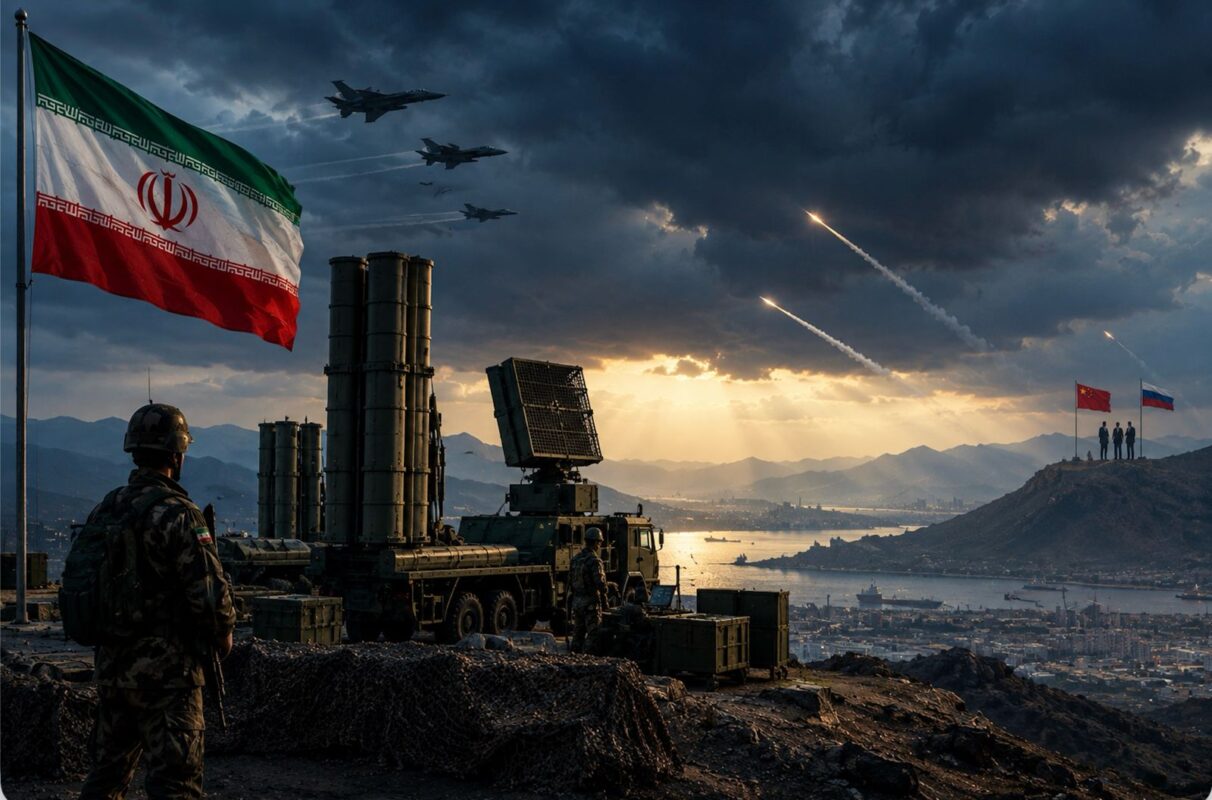
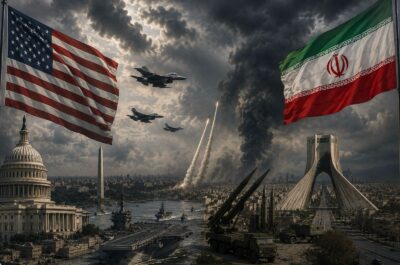
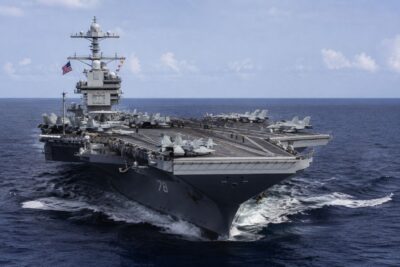
Today, America is struggling to conclude a war-of-choice – not against a new wave of non-state Islamic militants with shocking new techniques, but against a nation-state that is asserting the elementary strength of a global geostrategic chokepoint. The 2026 war against Iran, and the ambiguous truce that has followed it, have turned on precisely the kind of danger Bell kept in view: the leverage of a state that sits astride the Strait of Hormuz, through which close to a fifth of the world’s oil passes, and that has spent decades edging toward a nuclear threshold. The efficacy on display was not that of nineteen men with box-cutters but of governments, arsenals and chokepoints.

And while Islamic militants in Gaza remain focused, not on exporting jihad, but on their national aspirations against Israel, the war against Iran is likely to have made future nuclear stability between that country and America rather more difficult for future US presidents to manage. The wheel, in other words, has turned back from the non-state spectacular to the nation-state and its weapons. If the two decades after 2001 were dominated by the fear of stateless terror, the years Bell projected into are once again dominated by the older and larger danger of states and the bomb.

The Greater Danger Endures

25 years since 9/11, Bell’s doubt that international politics was set to “dissolve into a fog of non-state actors” seems correct. Whether we will see correct management of nuclear weapons in the ongoing twilight of the unipolar world is another question, and, on the present trajectory of the arsenals and of the treaties that once contained them, not an encouraging one.

Picture of Benedict Moleta

Benedict Moleta