Essay Series
Essay /010/October/2026/London-Dialogue. 12 October 2026
Author: Dr Ju Hyung Kim
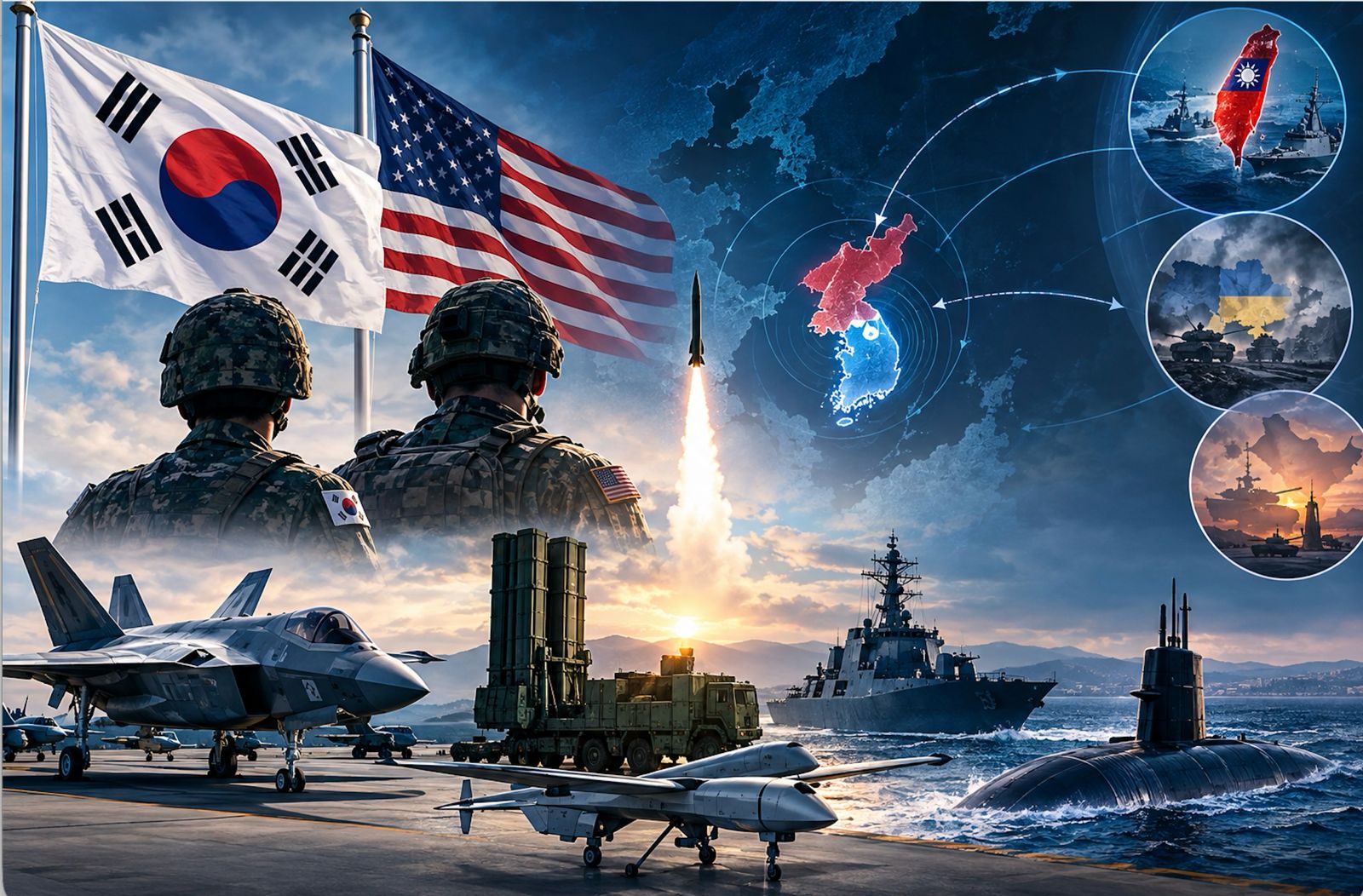
For decades, the U.S.–South Korean alliance has rested on a familiar division of labour: Washington offers extended deterrence and a series of high-end strategic support capabilities, while Seoul assumes the bulk of the conventional burden for Korean Peninsula defence. The structure was appropriate when a full-fledged war on the Korean Peninsula could be treated as a stand-alone regional contingency, and the introduction of U.S. reinforcements on a substantial scale was automatically premised.
However, such an assumption is becoming less comfortable since a crisis on the Korean Peninsula could occur when the United States has to respond to multiple contingencies across diverse regions—such as Taiwan, the European continent, and the Middle East. While dedicated to South Korean defence, Washington could likely face surging demand for satellites, tankers, missile defence systems, submarines, and command-and-control capacity elsewhere.
To exploit the situation in its favour, Pyongyang does not necessarily need to believe that the U.S.-ROK alliance has seriously fractured. It only needs to judge that nuclear coercion, a limited conventional attack, or escalation below the threshold of an all-out war could be an attractive option since U.S. attention is distracted. The resulting vulnerability lies between America’s nuclear assurances and South Korea’s conventional preparedness.
The Lee Jae-myung administration’s push to complete the wartime operational control (OPCON) transfer is making this gap harder to ignore. Seoul is already accelerating the acquisition of capabilities related to South Korean-led combined defence, which include the KF-21, L-SAM, medium-altitude reconnaissance UAVs, and expanded drone and counter-drone forces. The next step should be conceptual. OPCON transfer should shift the alliance from conventional to strategic burden-sharing.
From Conventional Burden-Sharing to Strategic Burden-Sharing
South Korea should establish a plan to substitute for U.S. reinforcement capacity that would most likely become scarce in the first month of Taiwan-Korean Peninsula dual contingencies.
The first substitution problem is ISR. South Korea has currently completed its five-satellite 425 Project constellation, combining one electro-optical/infrared satellite with four synthetic-aperture radar satellites. Nonetheless, five advanced satellites are not equivalent to constantly tracking every mobile missile launcher, artillery force, command post, and drone unit.
South Korea should, therefore, deploy multiple smaller SAR and radio-frequency satellites and integrate them with medium-altitude UAVs, passive electromagnetic sensors, commercial imagery, and AI-assisted targeting. The goal should be a South Korean version of Kill Web in which a sensor could hand a target to other sensors while multiple shooters could receive tracking data on the same target. Even if American space assets are concentrated in and around Taiwan, Seoul should be able to find key North Korean targets using South Korean sensors.
The second problem is strike. Weapon systems like Hyunmoo-5 offer a conventional option against deeply buried and hardened North Korean ground targets, but strategic deterrence should not be considered synonymous with large ballistic missiles. Hyunmoo should be paired with F-35As, KF-21s that are equipped with long-range air-to-ground armaments, naval strike platforms, and a variety of inexpensive unmanned systems. Expensive missiles should exclusively be used against targets that necessitate penetration, range, and velocity, while decoys, loitering munitions, and electronic warfare drones should complicate adversaries’ defense networks and create openings for high-end weapon systems.
In a protracted war, what South Korea needs is not only impressive initial salvo fires but also sufficient ammunition stockpiles that could keep imposing costs while America’s precision-guided munitions are consumed elsewhere.
The third substitution problem is air and missile defense. In line with the Korea Air Missile Defense (KAMD), South Korea is already deploying M-SAM Block II and expanding towards L-SAM, L-SAM II, and M-SAM Block III. Nevertheless, Ukraine and the Middle East demonstrated that air defense is both a technological and an economic contest. By coupling cruise missiles with decoys and affordable drones, North Korea could impose a disadvantageous cost-exchange rate on the defenders.
This is why South Korea’s laser air defense weapons, Cheongwang, and interceptor drones that are now under development are strategically important. A low-cost drone should not routinely trigger the launch of high-end interceptors such as the Patriot, M-SAM, or L-SAM. Electronic warfare, machine guns, lasers, and interceptor drones should defend the lower tier, while scarce interceptor missiles should be preserved for more dangerous weapons. Seoul should partially evaluate its missile defense based on whether it could continuously function on day twenty or thirty and not on whether it could simply withstand the first series of attacks.
The fourth substitution problem lies at sea. South Korea’s six P-8A Poseidons has undoubtedly enhanced anti-submarine surveillance capabilities, but they remain a small fleet if North Korea disperses its submarines and U.S. P-8s and attack submarines embark on a substantial operation near the Taiwan Strait. Hence, Seoul should combine its P-8 assets with surface vessels, submarines, fixed and deployable undersea sensors, and eventually unmanned maritime systems. The objective would be to maintain South Korea’s independent anti-submarine picture without presuming America’s affluent maritime ISR capabilities.
Preparing Against North Korea’s Ukraine-Style Warfare
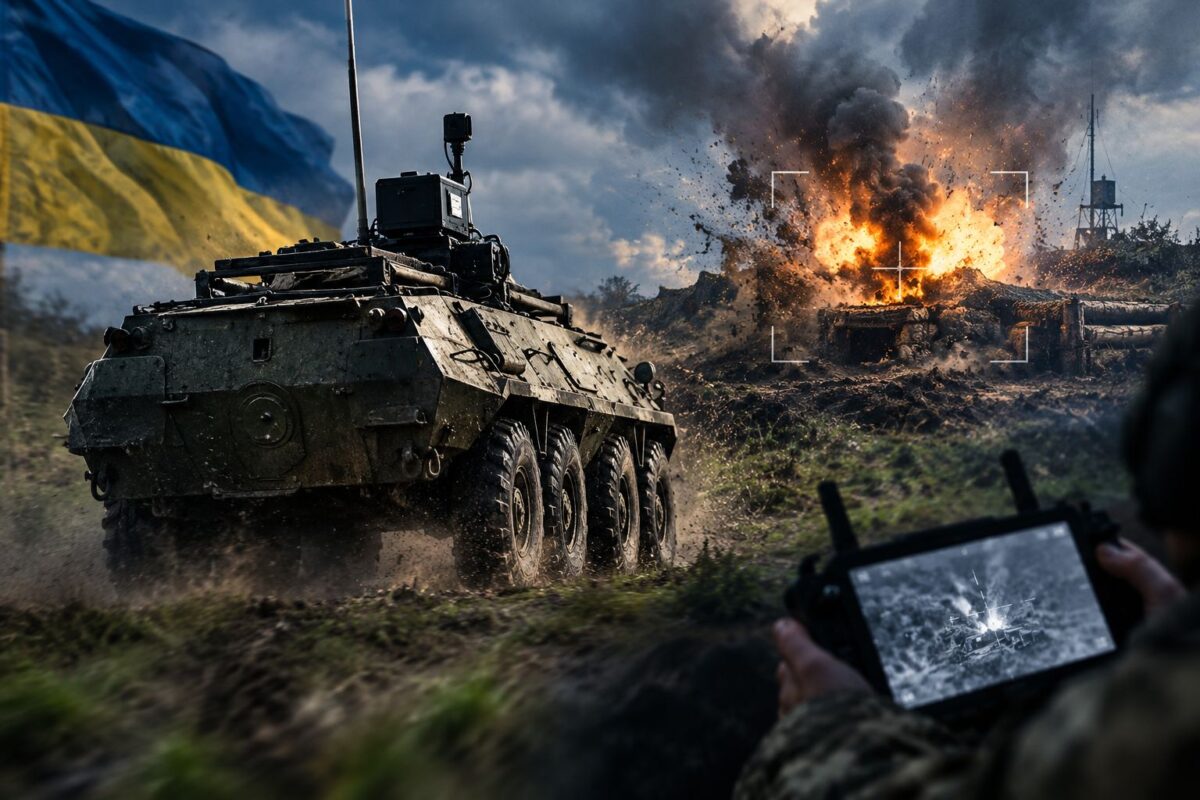
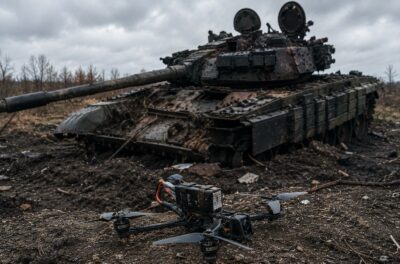
North Korea’s Ukraine experience makes the drone and electronic warfare gap particularly imminent. The lesson is not merely that North Korean troops would return home knowing how to pilot FPV drones. More concretely, they may have gained expertise in short sensor-to-shooter cycles, UAV-guided artillery fire, rapid dispersion, electronic warfare, and battlefield adaptation under high-intensity surveillance.
South Korea should expect that such lessons will be integrated into capabilities that Pyongyang already possesses—artillery, special operations units, underground facilities, ballistic and cruise missiles, camouflage, and deception. As a result, a more dispersed North Korean reconnaissance-strike system could emerge in which small UAVs detect South Korean troops’ locations, FPV or loitering munitions swiftly strike exposed radars and vehicles, electronic warfare interrupts GPS and tactical communications, and its artillery units rapidly redeploy after firing.
Seoul should thus require unmanned mass, rather than mere advanced prototypes. Reconnaissance drones, loitering munitions, electronic warfare drones, decoys, communication relays, autonomous interceptors, and unmanned military vehicles should be acquired in large quantities so that they could be expendable.
This would be one way of addressing issues concerning manpower constraints. Machines should operate missions related to constant surveillance, dangerous logistical support, and some strike operations that could consume scarce personnel. In a high-intensity war of attrition, a country that could easily replenish drones may enjoy an advantage that cannot be measured simply by counting the number of fighter jets or tanks.
Meanwhile, cyber and electromagnetic capabilities should be integrated within the same strategic layer. South Korea needs options that could jam North Korea’s communications, navigation, radar, drone control, and military networks without immediately destroying physical facilities. The capacity provides a low degree of vertical escalation compared to a Hyunmoo missile attack and facilitates slowing down North Korea’s operations while leaving more destructive options for the latter stages of a crisis.
A 30-Day Test for the OPCON Transition
All of this should be aligned with measurable criteria for the OPCON transition. South Korea should adopt a standard for 30-day strategic self-reliance. To be sure, this does not mean independence from the United States but refers to a capacity to sustain critical operations in the initial month of large-scale warfare without presuming immediate U.S. reinforcement in every category.
Could South Korean satellites and UAVs maintain target acquisition even if American ISR assets are sent to Taiwan? Could KAMD survive after weeks of hybrid missile and drone attacks? Can South Korean fighter jets continue to generate sorties if U.S. munitions deliveries slow? Could the South Korean navy keep up anti-submarine surveillance using its P-8s and sensors? Could the South Korean defense industry replace drones and interceptors at a meaningful wartime production tempo? These questions may be more important to OPCON credibility than the nationality of the supreme commander.
The Nuclear Consultative Group (NCG) and Conventional-Nuclear Integration (CNI) provide a framework for such an approach. CNI should not only mean South Korea’s conventional arms support for U.S. nuclear missions. It should also signify building up South Korea’s conventional capabilities to reduce the number of scenarios in which Washington should consider quick nuclear escalation.
For decades, burden sharing meant the U.S. offering a nuclear umbrella while South Korea supplied conventional mass. In an era of multiple wars, a different type of division of labor is required. Needless to say, Washington should continue to provide extended nuclear deterrence and other capabilities that Seoul could realistically not replicate in the foreseeable future. Yet South Korea should increasingly provide a strategic conventional layer beneath it.
The goal is not strategic autonomy from Washington. It is instead strategic resilience within the alliance. If Seoul could survive, disrupt, and strike North Korean forces using its own means in the initial month of the crisis, Pyongyang would be less likely to believe that a Taiwan contingency or other global emergencies would create a temporary window of opportunity on the Korean Peninsula.
Dr Ju Hyung Kim currently serves as a Nonresident Fellow with 38 North at the Stimson Center and as a Research Fellow at WARLAB NEXUS. He is also president of the Security Management Institute, a defence think tank affiliated with the South Korean National
Assembly.