

Publications
Beyond the Mecca Accord: Why Pakistan Must Choose Deterrence over Entanglement in Yemen
Maryam Azam
Analysis Series
Analysis/0090/September/2026/London-Dialogue. 26 September 2026
By Dr Maryam Azam
Introduction
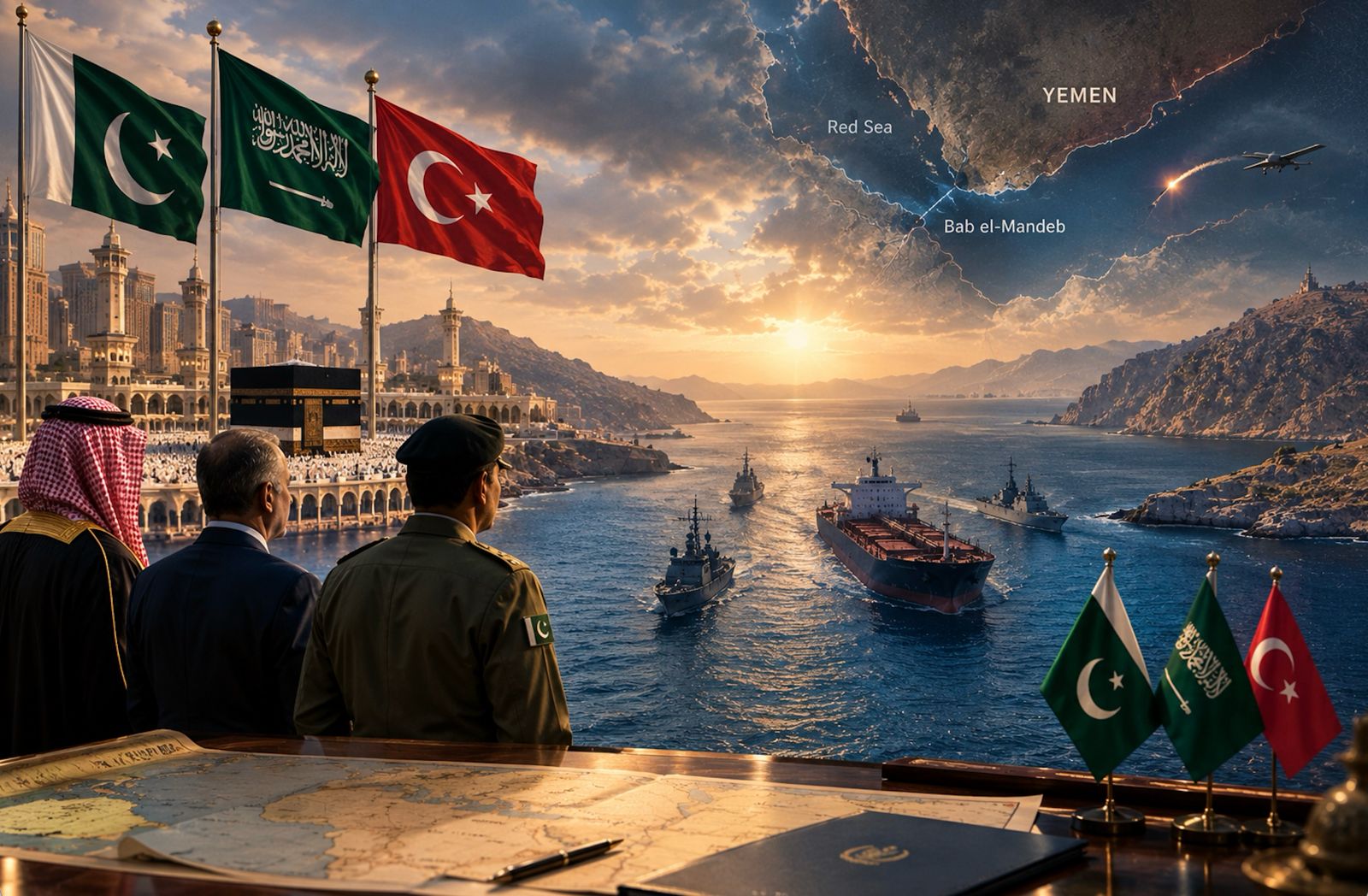
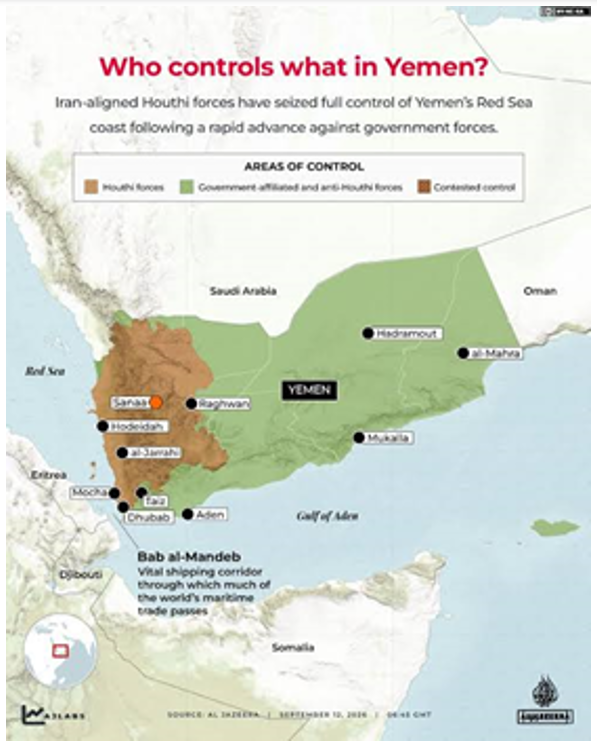
The Mecca Joint Defence Agreement marked a watershed moment in trans-regional security architecture between Pakistan, Saudi Arabia, and Türkiye. The signing of the pact on 7th August 2026 in Makkah has a symbolic nature, signifying politico-religious power and shared identity. One of the immediate test cases and challenges to the pact is the protracted war in Yemen and the persistent threat architecture posed by Houthi escalations, maritime blockades, and cross-border missile strikes targeting Saudi infrastructure. For Pakistan, the agreement extends its multi-vector foreign policy approach and transitional security architecture, yet it poses profound diplomatic and strategic challenges. Since 2015, a number of states, including Saudi Arabia, the US, the UK and Israel, have conducted multiple airstrikes against the Houthis, but they have been unable to completely disrupt the Houthis’ control in the northwest region, mainly due to its geography, fragmented opposition against Houthis, and strong external military and diplomatic support, mainly from Iran. Therefore, airstrikes have not been able to remove Houthis from the territory they control. The 2022 UN-brokered deal between the government of Yemen and Houthi rebels slightly paused the conflict, but it drastically escalated in July 2026 following a Houthi naval blockade against Saudi ships. They captured strategic chokepoints that provided them dominance over Red Sea navigation. The Houthis captured Perim Island (Mayyun) and the Greater and Lesser Hanish Islands, which provide direct access to and control of the Bab-el-Mandeb Strait. The Mandeb Strait carries about a fifth of global oil supplies; in particular, Saudi oil is imported to Asia and Europe through this strait. In this framework, to navigate such a complex security architecture, Pakistan must adopt a pragmatic, calculated, and calibrated approach to the issue, particularly its role in the aftermath of the Mecca Agreement. Given the complexities of the regional environment, Pakistan should avoid both direct kinetic involvement and complete disengagement. Instead, it should exercise strategic restraint by maintaining credible extended deterrence while providing non-kinetic and institutional support. Such an approach would allow Pakistan to safeguard its strategic interests without committing expeditionary forces to a potentially prolonged and costly conflict.
Regional Security Complexes and Asymmetric Realities
To understand Yemen and its structural counter-productivity, it is important to understand the region’s geographic and security composition. The signatories of the Mecca agreement have distinct security complexes. This security framework also highlights the distinctive nature of the Mecca Agreement, which differs from traditional security arrangements primarily built around a shared perception of common threats. Saudi Arabia mainly operates within the Middle East and Persian Gulf security complex, whereas Pakistan operates within the South Asian security complex. Türkiye has a unique inter-regional security complex partially sharing the Middle East and Black Sea. Therefore, each state has its own security complex, and local power dynamics cannot be easily homogenised. Pakistan’s primary regional security complex demands absolute focus on its own immediate geographic perimeter. Diverting kinetic combat resources away from South Asia and the western borderlands to project power into the Arabian Peninsula creates a dangerous strategic vacuum at home. In addition, the asymmetric nature of Houthi warfare creates a distinct conflict landscape in which conventional military capabilities are challenged by unconventional tactics and decentralised forms of warfare. Therefore, an offensive campaign under the Mecca Agreement is unlikely to provide a straightforward deterrent to Houthi escalation and may instead widen the conflict by drawing additional external actors into the confrontation.
Pakistan’s Domestic and Geopolitical Vulnerabilities
Pakistan’s internal security situation, marked by counter-militancy challenges along its western frontier, economic challenges, and the requirement to maintain a stable strategic deterrent in South Asia, creates significant strategic risks for Pakistan in joining any explicit military response. Firstly, it will rupture the delicate geopolitical balance with its western neighbour. A non-adversarial border with Iran is vital for Pakistan’s national security. Secondly, during the 2015 crisis, Pakistan responded with neutrality, a decision backed by the parliament of Pakistan with a unanimous mandate. This legacy is vital in understanding the aspirations of the public and legislative body regarding Pakistan’s potential role in the Yemen war. Thirdly, given the defensive nature of the Mecca Agreement, Pakistan should avoid direct offensive engagement in Yemen and prioritise defensive commitments, strategic restraint, and diplomatic efforts. Consequently, this approach would help Pakistan to avoid importing any sectarian-driven tendencies in Pakistan that can fuel religious dissent and domestic polarisation.
Deconstructing the Mecca Pact:
Pakistan, through a pragmatic diplomatic approach, can successfully deconstruct the technical framing of the pact. A rigorous reading of the agreement reveals specific legal and operational thresholds that Islamabad can leverage to justify restraint:
The Defensive vs. Offensive Threshold
The foundational language of the Mecca framework emphasises collective deterrence against external aggression and the protection of territorial integrity. Pakistan can draw a sharp legal-strategic line between defensive territorial protection (which Islamabad is structurally and morally bound to support) and offensive cross-border campaigns (such as punitive ground incursions or preemptive strikes into Yemeni territory). If Riyadh or coalition partners initiate or escalate major offensive campaigns inside Yemen, Pakistan can argue, consistent with established legislative precedent, that offensive operations fall strictly outside the defensive scope of the treaty. Pakistan’s DG ISPR also stated this. DG ISPR’s recent statement that Pakistan will go to any extent, both diplomatically and physically, comes at the same time as Pakistan is earnestly and sincerely working with regional countries toward a negotiated, peaceful outcome of this complex situation. Therefore, Pakistan’s policy choice may not be strictly binary between intervention and non-intervention; instead, it could adopt a calibrated approach that combines strategic restraint, defensive commitments, and diplomatic engagement.
Focusing on Consensus-Based, Non-Kinetic and Institutional Mechanics
Pakistan can frame restraint as a procedural requirement for risk analysis and consensus-based threat perception. Pakistan can use escalation channels to help dissuade heightened tensions instead of any frontline response. In view of the Mecca Agreement framework, high-level consultations can be initiated through the Strategic Political and Defence Committee. Pakistan can also play a pivotal role in enhancing Saudi preparedness and response through relevant intelligence sharing, early warning mechanisms, surveillance support, and threat assessment. Pakistan can provide defensive military assistance through capacity building, training, logistics, and air defence technical cooperation that is consistent with the defence cooperation Mecca agreement. If Pakistan’s commercial ships or other maritime interests are threatened, it can protect its vessels through patrolling rather than an offensive response. Moreover, Pakistan should abide by commitment to Saudi defence through a calibrated strategic ambiguity to avoid any automatic commitment to any offensive military action Pakistan-Yemen-intervention. Pakistan could maintain a credible defence commitment while leaving the nature and extent of military assistance contingent upon the nature of the threat. Such an approach would allow Pakistan to uphold its obligations under the Mecca Agreement while retaining strategic flexibility and reducing the risk of direct involvement in an extended regional conflict.
Conclusion
The Mecca Joint Defence Agreement is a vital instrument for regional stability, but its long-term viability depends on realistic assessment of member states’ strategic limits. It should be interpreted through the lens of deterrence and collective defence. Therefore, the defensive character of the agreement provides space for Pakistan to pursue a calibrated strategy that combines credible deterrence with strategic restraint. Islamabad can strengthen Saudi Arabia’s defensive capacity through intelligence sharing, training, technical assistance, air-defence cooperation, and institutional coordination while retaining diplomatic channels with Iran and other regional actors. Such an approach would allow Pakistan to demonstrate commitment to Saudi security without automatically becoming a participant in offensive operations in Yemen. In a conflict characterised by asymmetric warfare, external involvement, and the potential for rapid regional escalation, preserving strategic flexibility may be essential to protecting Pakistan’s own security and economic interests. The objective, therefore, should be deterrence without entanglement: maintaining the credibility of the Mecca framework while keeping escalation and diplomacy and keeping Pakistan’s national interest central to its response.
Maryam Azam
Related posts
Rivers as Leverage: India’s Suspension of the Indus Waters Treaty and the Logic of Hydro-Coercion in South Asia
Iraq After Operation Inherent Resolve: Testing Security and State Control
The Electrostate Thesis: Geopolitics, Clean Energy Dominance, and China’s New Global Leverage
A Last Open Letter to President Mr D. J. Trump
Iran’s Reliance on “Self-Defence” in the Shadow of “Strategic Loneliness”
From Chokepoint Diversification to Coupling: Hormuz, Bab al-Mandab and the New Fragility of Gulf Energy Security
Imran Khan’s Solitary Confinement and the Mandela Rules
The South Atlantic Flashpoint: Argentina Tests Britain, Chile, and the US
Religious Rhetoric Around the Mecca Defence Agreement and Its Long-Term Impacts for Pakistan
Operationalising The Maritime Dimension Of The Makkah Joint Defence Agreement
The Arithmetic of Saturation: What the Iran War Taught About the Limits of Layered Air Defence
From Security Dependence to Strategic Autonomy: The Gulf Amid the 2026 Iran War
London Dialogue — Founding Statement
Publication Categories
- Analysis (102)
- Book Review (1)
- Commentary (6)
- Essay (9)
- Journal (0)
- Journal Article (0)
- Policy Brief (6)
- Policy Paper (1)
- Research Article (2)
- Research Report (5)
- Young Writers Corner (0)